



Act 2 of 2001: A Space Odyssey is probably the shortest of the three acts, and it’s the most confusing. I think this entire act could’ve been cut to one, maybe two, scenes. All that’s really needed is the discovery of the Monolith on the moon and the moment when it releases its signal.
But I understand why the writers added more because this sequence is directly inspired by Arthur C. Clarke’s short story, “The Sentinel,” where a similar artifact is discovered on the moon. In both the film and short story, the artifact is a beacon meant to contact alien life when it’s discovered. In both the film and the story, the reason why the aliens want this signal is unknown.
We meet Dr. Floyd
The act opens with Dr. Heywood R. Floyd traveling to a space station where he will eventually board a ship meant to take him to the moon. It should be noted that Dr. Floyd is a recurring character in the Odyssey series. While aboard the space station, he calls his daughter. Then, while Floyd is sitting with a group of people, a Russian scientist asks him about a possible plague that has infected the moon base he’s traveling to. Floyd is deliberately cagey in his responses, and the audience soon learns why. When he travels to the base, Floyd mentions that the plague is in fact a cover story for what the base has really found on the moon: another Monolith. This Monolith has been deliberately buried, and no one knows why.
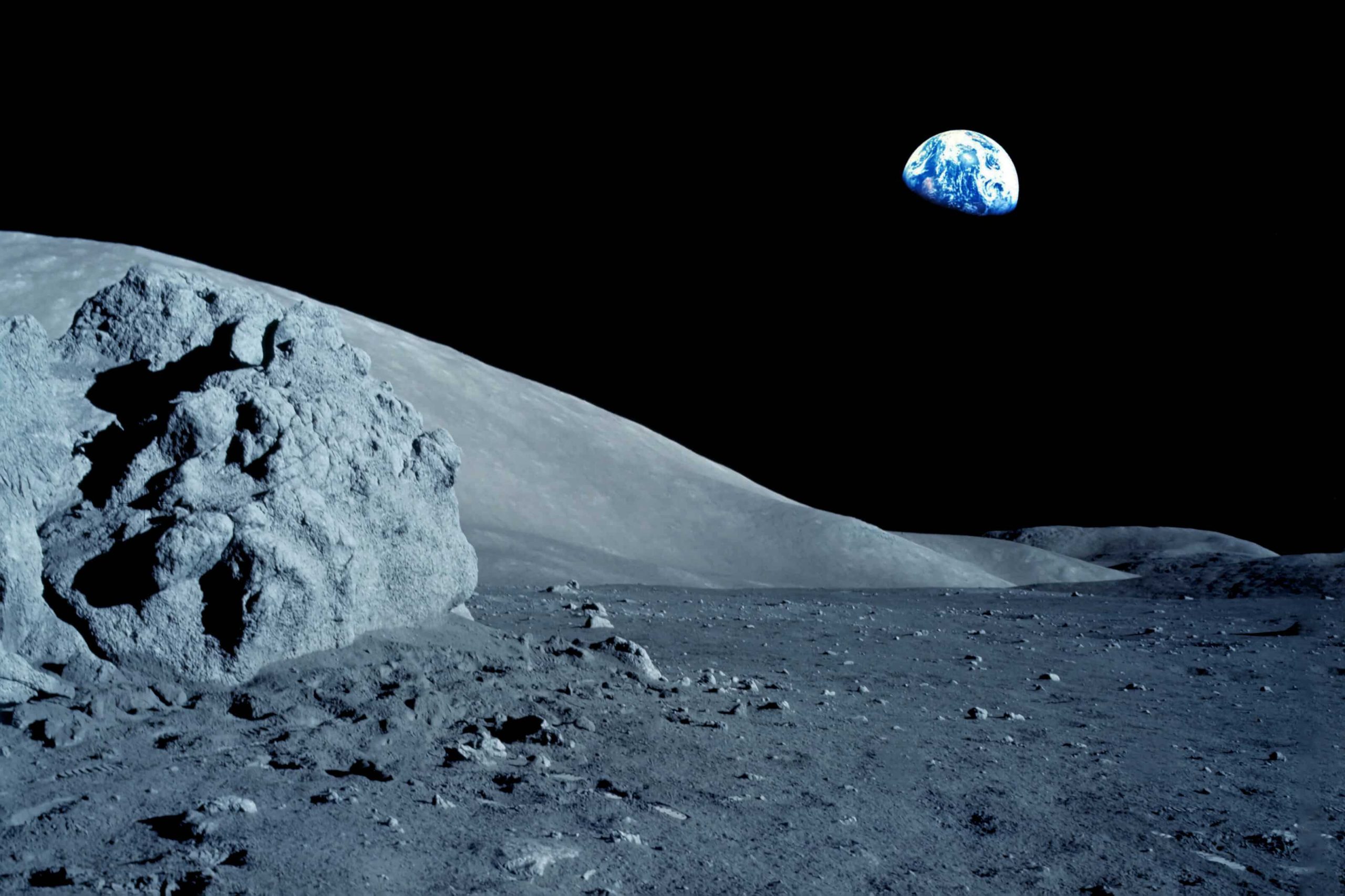
Floyd travels to the crater where the Monolith was uncovered. When he enters the crater, once again, the eerie music plays. Floyd touches the Monolith, and then he and the other scientists gather around it for a group photo. Then they hear a painfully loud noise through their radios. The scene ends with the group writhing in pain while the sun and a crescent Earth hang over the Monolith.
Clues about the Monolith
In the book, the Monolith is a beacon that is activated by the sun. The moment it’s uncovered and the rays of the sun touch it, it releases its signal. This signal is later detected by multiple space probes as it moves away from the moon. The scientists realize the signal is heading toward Saturn, not Jupiter, as is shown in the film. Apparently, the reason for this change was that Kubrick was unsatisfied with the special effects department’s depiction of Saturn. He went with Jupiter because it was easier to create.
I understand wanting to include this act because of the tie-in with “The Sentinel,” but the only real connection it has to the overall theme of the movie is the space travel that takes place in the act’s opening sequence. Granted, watching the women walking around the ships is fascinating, making one wonder about the various complexities of traveling in zero gravity, and the visual effects in this movie easily hold up to today’s standards. But there are three major issues with Act 2.
Heywood vs. Bowman
The first is that I confused Heywood as the protagonist during my initial viewing of the film and this made it harder to become invested in Dave Bowman later on because, for all I knew, the movie could shift POVs at any moment. The second issue is redundancy. While the spacewalking is impressive, similar effects are done during the introduction of the Discovery One.
Watching the stewardesses walk around is great, but by the time we see the crew of the Discovery doing the same thing, the effect feels repetitive. And as much as I love the space ballet at the beginning of the second act, a similar dancing spacecraft sequence could’ve been done with the Discovery and its shuttles. This would’ve saved valuable time. Instead of showing Heywood’s spaceship docking on the station, the writers could’ve shown Bowman and his partner performing maintenance on the Discovery, and while this wouldn’t have been as neat to watch, narratively, it would’ve accomplished the same goal, establishing the wonder of technology.
And the third issue… the big one: HAL
The first issue I consider substantial because it affects the stakes, the investment in the main character. The second issue is really more of a nitpick than anything. However, the third issue is what I consider to be the greatest problem: it splits up the film’s premise, making it harder to connect the idea presented in the Dawn of Man sequence to the technological pinnacle of the flying bone, which is introduced in the third act: HAL.
The idea of technology and weaponry being identical is best personified in the character of Hal. The same shot of the bone turning into a spaceship could’ve been done with the Discovery itself, and that would’ve freed up more time to show Hal actually helping the crew before he turns on them.
The film attempts to present the positive aspects of technology through the space travel sequence in the second act. But sandwiching Heywood Floyd’s brief story between the sequence after the Dawn of Man prelude and the introduction of the Discovery breaks up the transition between technology as a benefit and technology as a weapon. That makes it more difficult for the audience to connect the positive and negative aspects of the Monolith’s revelation.
In my opinion, the two concepts needed to be juxtaposed in order to really sell the idea: The dichotomous nature of technology needs to be shown side by side. This could’ve been easily done directly with Hal, which would’ve required giving the AI more screen time. The audience needs to see more of Hal’s benefits in order to drive home the horror behind his actions and the core idea of the film.
HAL’s “conscience”
There was a lot to work with on this point. The book goes to some length explaining Hal’s issues, saying that the conflict between his programming and the directive to keep the true nature of his mission a secret had created something akin to a conscience inside of him. This manifests in him attacking the crew in order to hide his lie about the broken AE-35 unit.
I don’t support the underlying concept, but one of the core ideas behind the Odyssey series is that machines have the capacity to become like men, and Hal’s proto-conscience is an example of that. Whether or not we agree, the movie would’ve benefited from an exploration into Hal’s positive role on the ship as well as his motives and mechanical mental state overall. However, Hal’s story is sacrificed in favor of Heywood’s brief tale. There’s nothing wrong with Heywood’s act in and of itself, but it does feel forced into the film.
Again though, I understand why. “The Sentinel” is the inspiration for the movie — no short story, no film — but personally, I don’t feel the entire act is needed. One or two scenes showing the Monolith releasing its signal on the moon would’ve accomplished what was needed. The dichotomy of technology could’ve been presented in the third act, rather than dividing it between two acts in the film. We’ll look at Bowman’s story next Saturday.
The series to date
Here’s the first part of my review: 2001: A Space Odyssey was a new type of science fiction, The film is perhaps best understood as three completely different stories whose only connection is the monolith. The greatest measure of a film’s success is the test of time. Something about this film works even though it breaks conventions.
Here’s the second: Space Odyssey 2001: Decisions to make about that Monolith. In Part 2 of my series on the sci-fi great, I want to consider where the Monolith fits in the hard vs. soft magic systems that make for sci-fi stories. Letting the question of who sent the monolith remain a mystery was probably a wise dramatic choice on the part of the writers.
And the third: Space Odyssey 2001: Were Clarke and Kubrick at odds? Part 3: The ambiguity in 2001 is not the result of artistic muddiness but the middle ground for an unspoken conflict between the two writers. One thing is for certain. In the iconic Dawn of Man sequence, the Monolith is conveying information. The question is how.