



This article is republished from Science and Culture Today.
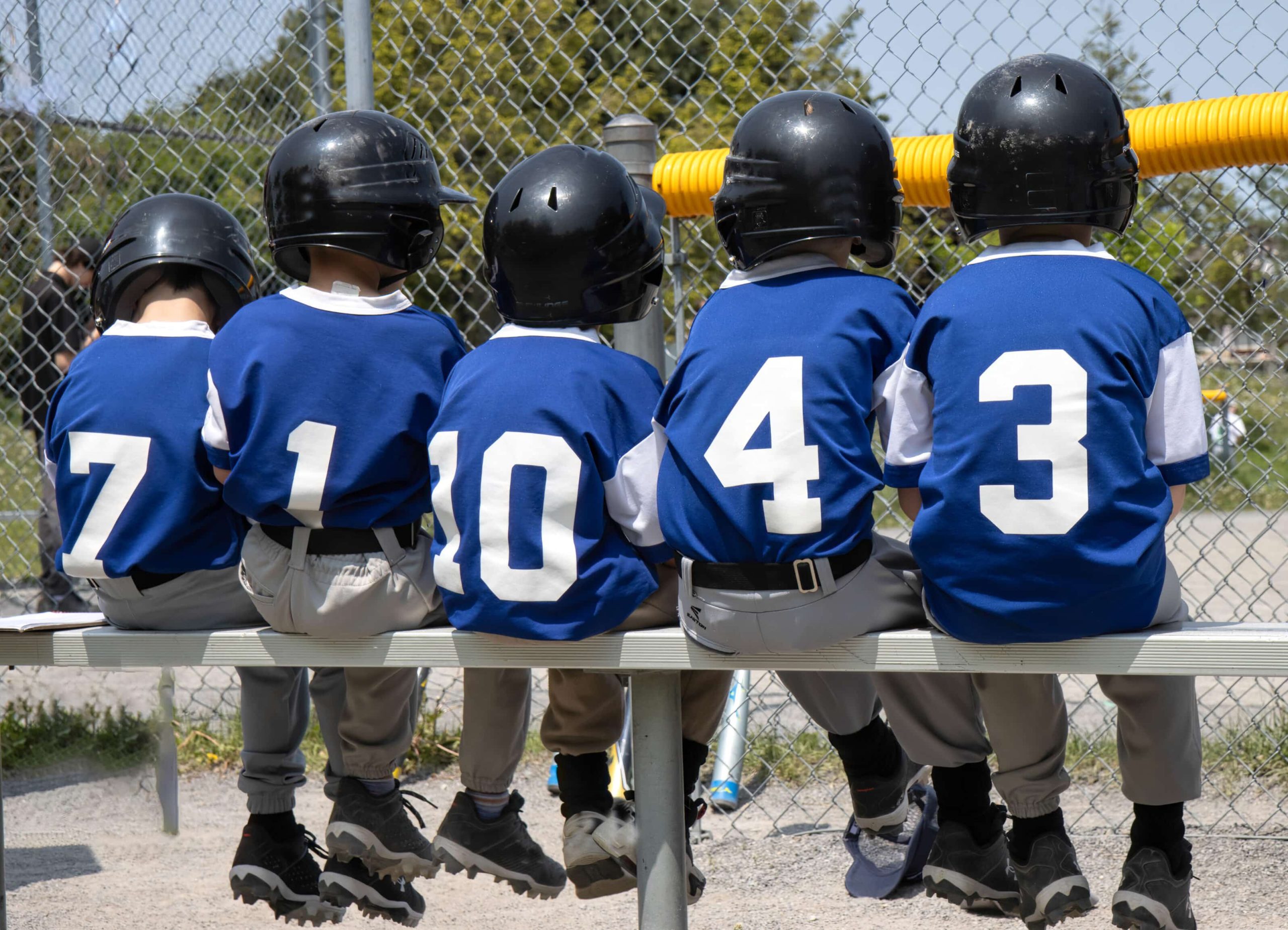
I used to coach baseball at the middle and high school levels. In a game, nine players from a team are listed in the lineup, and it’s necessary for each player to take a turn at bat before being any of them is allowed to bat again. Understood as a learning opportunity, each at bat is therefore only one ninth of the total at bats. So a player is only learning one ninth of the time that players on his team are at bat.
For learning to improve one’s game, this use of time is therefore highly inefficient. That’s why games are not a great way to hone a player’s batting skills, and separate practices are needed. Unfortunately, much of traditional K–12 education is inefficient in this way, focusing on the activity of one or a small group of students in a classroom while the rest of the class sits idly watching.
Besides improving the effectiveness and efficiency of learning traditional academic subjects, AI-driven technology promises to open entirely new frontiers in K–12 mastery, extending learning well beyond the traditional curriculum and enabling students to acquire high-level, once-rare skills. Consider the following possibilities:
- Accent and Pronunciation Refinement in Language Learning
Speech-recognition AI can analyze intonation, rhythm, and articulation down to the phoneme, offering individualized correction and visualized feedback, especially for non-native speakers who want to eliminate an accent. Students can practice repeatedly with voice models until their accent aligns with native fluency — an outcome rarely attempted, much less achieved, in traditional classrooms. - Creative Writing with Rhetorical Precision
AI editors can train students to identify and employ rhetorical devices — analogy, parallelism, irony — and revise for tone, cadence, and argument strength. Instead of vague feedback, students get detailed stylistic analysis mapped to classical rhetorical methods. Classical schools would likely be early adopters. - Polyphonic Music Composition and Performance
AI-guided keyboard and ear-training software can help students not just play Bach’s music but think contrapuntally. Thus they will learn voice-leading, harmony, and music theory not in the abstract but in real time as they compose or perform. Feedback systems can identify harmonic tension, suggest corrections, and let students iterate toward mastery of multi-voice textures. - Advanced Sight-Reading and Aural Skills for Musicians
AI ear trainers can generate exercises dynamically, listening to a student’s singing or playing and giving instant corrective guidance. Learners can progress through increasingly complex rhythms, keys, and harmonic progressions — achieving conservatory-level fluency before college. - Scientific Experiment Simulation and Inquiry-Based Discovery
Students can design and run virtual experiments in physics, chemistry, or biology with AI labs that model real-world variables and data. The system can prompt hypotheses, predict outcomes, and help interpret anomalies — cultivating genuine scientific reasoning. Anyone anywhere with an internet connection and a computer can thus become a budding scientist. - Mastery of Mathematical Intuition and Visualization
AI-driven virtual-reality environments can help students visualize abstract mathematical concepts dynamically, letting students manipulate parameters and see underlying relationships. Over time, learners internalize mathematical structures through direct experiential interaction rather than rote formula use. - Fine Motor and Artistic Skill Development via Gesture Feedback
Vision-based AI can analyze brushstrokes, pen pressure, or sculpting motions, giving immediate feedback on proportion, perspective, and technique. Students can thus master skills like calligraphy, drafting, or figure drawing once possible only under expert tutelage. - Debate and Argumentation Coaching
Sufficiently advanced natural-language processing will be able to listen to and comprehend dialogue, assessing claims, evidence, and logical coherence in real time as students engage in debate. The AI coach can suggest stronger evidence, point out fallacies, and help students strengthen persuasion. - Emotional Intelligence and Empathy Training through Simulated Dialogue
Conversational AI avatars can role-play complex emotional and social scenarios, letting students practice empathy, negotiation, and conflict resolution. Feedback can highlight emotional cues and alternative responses, cultivating social maturity rarely addressed in standard curricula. - Advanced Memory and Visualization Techniques
AI tutors can train students to organize and recall large bodies of knowledge by turning abstract information into vivid, memorable stories or spatial patterns. Using adaptive prompts and personalized review schedules, learners can develop exceptional recall and deep understanding across subjects — from history dates to scientific classifications.
This last skill, if achievable through AI and becoming widespread among students, would be of both practical and historical significance. Before books and literacy became commonplace, cultures were largely oral, and a strong memory was a virtue. One concern about Gutenberg’s press is that human memory would weaken on account of it. That concern is, given the internet, greatly amplified, with so much of human knowledge now being instantly accessible, requiring very little of our capacity for recall. Use it or lose it — and people in developed nations have lost a lot of their memory capacity. AI can reverse this trend, empowering the memory of student learners, and thereby helping them to be better learners generally. Indeed, who wouldn’t find a powerful memory useful in their studies?
The Oura Ring
One last technology I want to consider takes its inspiration from the Oura Ring, a “smart” ring placed on the index, middle, or ring finger of a person’s non-dominant hand. The Oura Ring tracks sleep, activity, heart rate, temperature, etc. through advanced biosensors, offering detailed insights into recovery and overall well-being. It has since its launch in 2015 gained widespread adoption worldwide, embraced by athletes, biohackers, and wellness enthusiasts as a discreet, science-based tool for continuous health monitoring.
What if something as unobtrusive as an Oura Ring could track student learning? Right now, brain imaging through functional near-infrared spectroscopy (fNIRS) or electroencephalography (EEG) could be used to track whether learners are bored, engaged, or cognitively overloaded. But these measurement devices are obtrusive, impractical, and for now unaffordable for widespread use in a classroom. In any case, students would not want to wear them.
A suitable low-cost unobtrusive device, however, could monitor brain states favorable and unfavorable to learning. Such a device could enable real-time adaptation of instruction, such as adjusting pacing or content to improve focus and retention. Such a device should not be used for surveillance to enforce conformity. Rather, it should be used by teachers and students to monitor when attention is drifting and then to course-correct.
Edification, Not Enhancement
The goal of using technology in education — as sketched here and consistent with Escalante’s legacy — is humanistic, not transhumanistic. The goal is edification, not enhancement. It is to grow by learning things that make us fuller, more vibrant versions of ourselves. It is not to correct defects in ourselves and ultimately replace ourselves through technologies aimed at dissolving our humanity.
My prediction is that the humanistic vision will prevail, leading to far more actual human flourishing than the transhumanist vision, which is all about using technology to fix and upgrade humanity. The humanistic vision is natural, like promoting health through good diet, exercise, and proper rest. The other is artificial, like relying on pharmaceuticals to achieve wellness.
Advice to Parents
I close with some advice to parents: Edify your kids, don’t enhance them. We are organic beings, not gadgets to be improved with newer and better modules (like the newest computer chips). We are alive and need to strive for becoming fully alive. So far, we haven’t tapped into the full potential of our humanity. So why look to transhumanism, whose aim is to so transform humanity as to render it unrecognizable? Transhumanism tempts us with FOLO (fear of losing out): enhance your children or else they will get left behind, unable to attend Ivy League schools, second-class citizens in the wider culture. Yet edifying your children is not only proven to make them thrive but also known to do no harm. Neither can be claimed for transhumanism.
Postscript: There is much talk these days among journalists, talking heads, and podcasters about artificial intelligence (AI) turning into artificial general intelligence (AGI), where AGI so puts our cognitive faculties to shame that it will take over the world, supplanting us and ultimately ridding the world of humanity. This is a pipedream. Certainly model collapse of LLMs (see here and here) suggests that these systems face inherent limitations that will ever keep them from reaching AGI. But there is a deeper theoretical reason for this in the idea of conservation of information, which demonstrates mathematically that computational systems can never output the novel information needed to attain AGI. For the demonstration, see my recent monograph on this topic (much of which is accessible to the lay reader).
Here’s Part 1: A Non-Transhumanist Vision for AI in Education Bill Dembski describes this new approach as amounting to edification rather than enhancement. AI should be used as a way of honing students’ skills and knowledge, helping them learn more effectively than before.
And Part 2: How AI could create vast increases in learning efficiency Artificial intelligence is promising to fundamentally transform education, leading to vast increases in efficiency of learning. Alpha School students are said to advance an average of 2.6× faster than peers on nationally normed MAP (Measures of Academic Progress) tests.