



Neuroscientist Dr. Joseph Green likes to describe his field as still growing up. In this week’s GeekPlanet podcast episode, he explained that sciences like physics and chemistry are considered mature because they offer strong mathematical theories that make accurate predictions. But neuroscience isn’t quite there yet.
Scientists know a lot about the brain — its parts, how neurons fire, and how brain areas communicate — but they don’t yet have a complete theory of how our thoughts, feelings, and experiences come from brain activity. Green compares the situation to the early days of studying electricity and magnetism: before James Clerk Maxwell (1831–1879) created equations to describe them, scientists could observe what was happening but didn’t really understand the underlying rules.
Neuroscience, he says, is in a similar position. Researchers can collect huge amounts of data, but they don’t yet know the “mathematical magic” that will tie it all together. The brain, with its billions of interconnected neurons, is likely the most complicated system humans have ever tried to understand.
New tools for understanding the brain
Even without a complete theory, neuroscience has made great progress thanks to new technologies. Green highlighted two that have been especially helpful: calcium imaging and optogenetics.
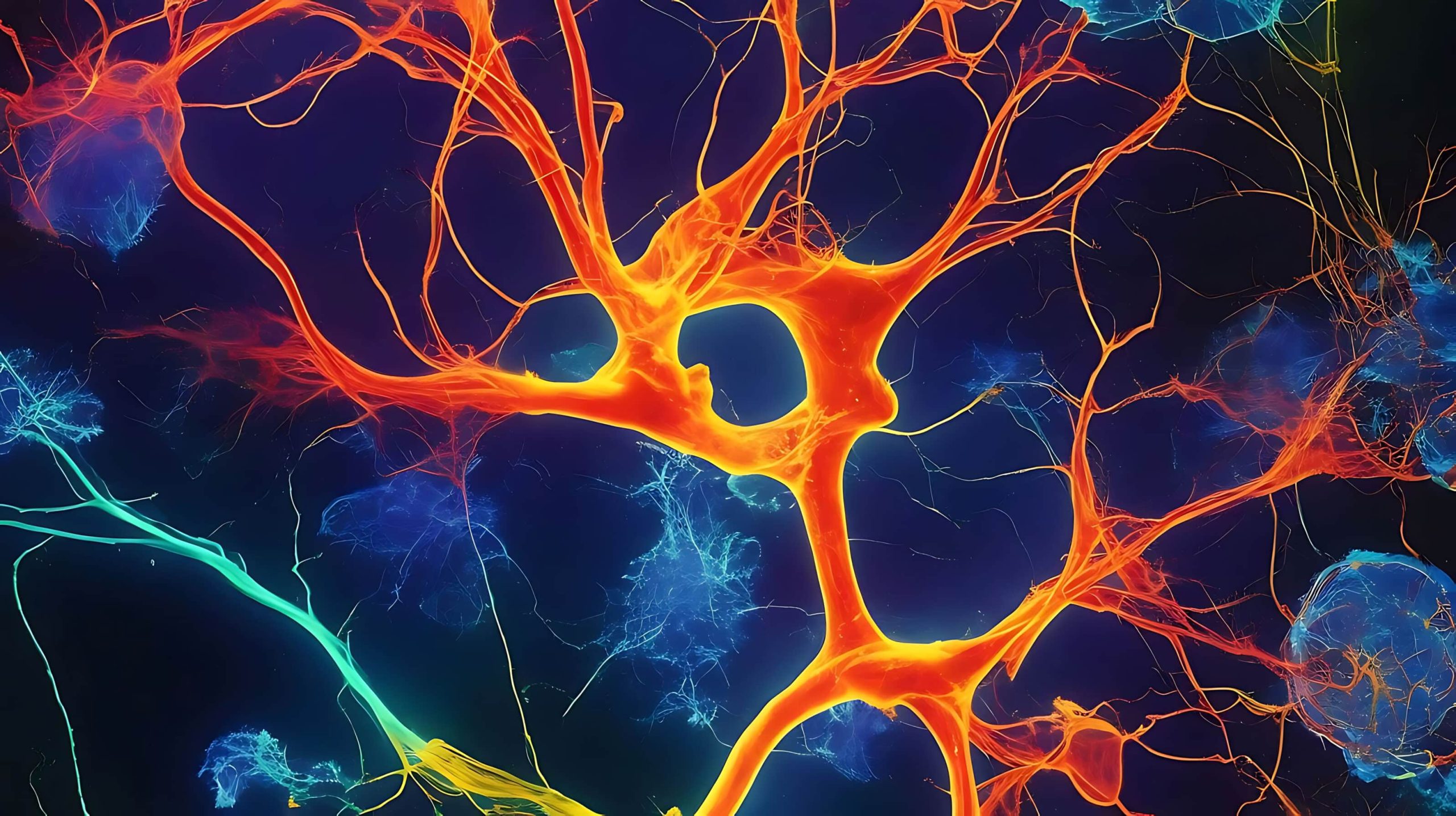
Calcium imaging involves genetically modifying animals — usually mice — so that their neurons light up when active. Using special cameras, scientists can record thousands of neurons firing as the animals move around. It’s like watching a city from above, with tiny lights turning on and off as thoughts and actions happen in real time.
Optogenetics takes things a step further. By inserting light-sensitive proteins into neurons, researchers can use light to turn specific neurons on or off. This lets them test what those neurons actually do. For example, they can see if turning off certain neurons affects a mouse’s ability to see or make decisions. Green calls this “a dream come true” because it finally gives scientists a way to explore cause and effect in the brain, not just correlation.
Reading and writing brain signals
Dr. Green was interviewed by Brian Krouse and Robert J. Marks. Measuring brain signals is another exciting area. As Marks noted in the interview, brain-machine interfaces often require sensors that touch or even enter the brain. Noninvasive tools like EEG (electroencephalography) can measure brain activity through the skull, but much of the signal gets blocked. More direct approaches, like ECoG (electrocorticography) with fine electrodes placed during epilepsy surgery, give clearer results.
These tools have made possible technologies like robotic arms that can be controlled directly by brain signals. Even though scientists don’t fully understand how the brain works, they can still interpret these signals well enough to use them. “We can engineer it without knowing everything,” Green explains. Still, he admits that a true mathematical model would allow for much more precise control and deeper understanding.
The mysteries that remain
Despite these breakthroughs, there’s still far more we don’t understand than we do. One example Green mentions involves astrocytes, a type of brain cell that isn’t a neuron. For years, scientists assumed astrocytes were just “support cells.” But new research shows they might process information too — possibly as much as neurons, but in a completely different way. Yet, most neuroscientists don’t study them at all. “We’re still neglecting a lot of what’s going on,” Green says.
There’s also a gap between different research approaches. Studies on animals can zoom in and manipulate individual neurons, while studies on humans usually observe large-scale brain activity. These two perspectives — one very detailed, the other broad — are hard to combine. Bridging them will be essential for a more complete understanding of the brain.
Lessons from worms and microchips
Green shares two examples that show just how difficult the brain is to really understand.
First, there’s C. elegans, a tiny worm with only 302 neurons. Scientists know every connection in its nervous system and can record activity from all of them at once. Yet even with complete data, no one can fully explain how the worm’s behavior — like moving or finding food — comes from those neurons. The problem isn’t lack of data, but lack of a unifying theory.
His second example involves a clever experiment by Konrad Körding’s group. They took a computer chip — a device whose design we completely understand — and studied it using the same methods neuroscientists use on the brain. Surprisingly, even with perfect knowledge of the chip’s structure and signals, they couldn’t “reverse engineer” how it worked. If we can’t fully decode a system humans designed, Green points out, how can we expect to easily decode the brain?
As Marks noted in the interview, the key difference is that we know a chip has a designer, and we know the mathematical logic behind the design. With the brain, we’re not even sure if such a mathematical model exists. Green says some scientists think it does while others doubt we’ll ever find it even if it does.
What the future might hold
So what would it take for neuroscience to become a fully mature science? Green believes it will require more than just better computers — it will take new technologies and new ideas. He imagines a day when scientists can record and control every neuron in the brain at once, mapping how information flows and how decisions form in real time. That, he says, could finally reveal the brain’s causal structure — the “why” behind thought and behavior.
Still, Green is realistic. He “would be very happy if in 10 years from now we have full understanding of the brain,” he says, “but I don’t think that will happen necessarily in the next ten years.” Yet he remains optimistic, pointing to the rapid rise of artificial intelligence as a reminder that breakthroughs can arrive sooner than expected.
A field full of promise and mystery
Today’s neuroscience dazzles with technology but still lacks a grand theory. Scientists can record brain activity, influence neurons, and even link minds to machines — but they can’t yet explain how consciousness arises or why we think the way we do.
As Green puts it, “We can engineer it [the brain] without knowing everything of whether or not there are equations that capture every single transitions in the system or process, or mechanism.” That humility may be what drives the field forward. For now, neuroscience stands on the edge between description and true understanding — still searching for the equations that could one day reveal how the brain works. Equations, as Marks points out, that may be unknowable or might even not exist.
Note: The name, Joseph Green, is a pseudonym. The name is motivated by its Italian translation: Giuseppe Verdi.
Additional Resources
Podcast Transcript Download