



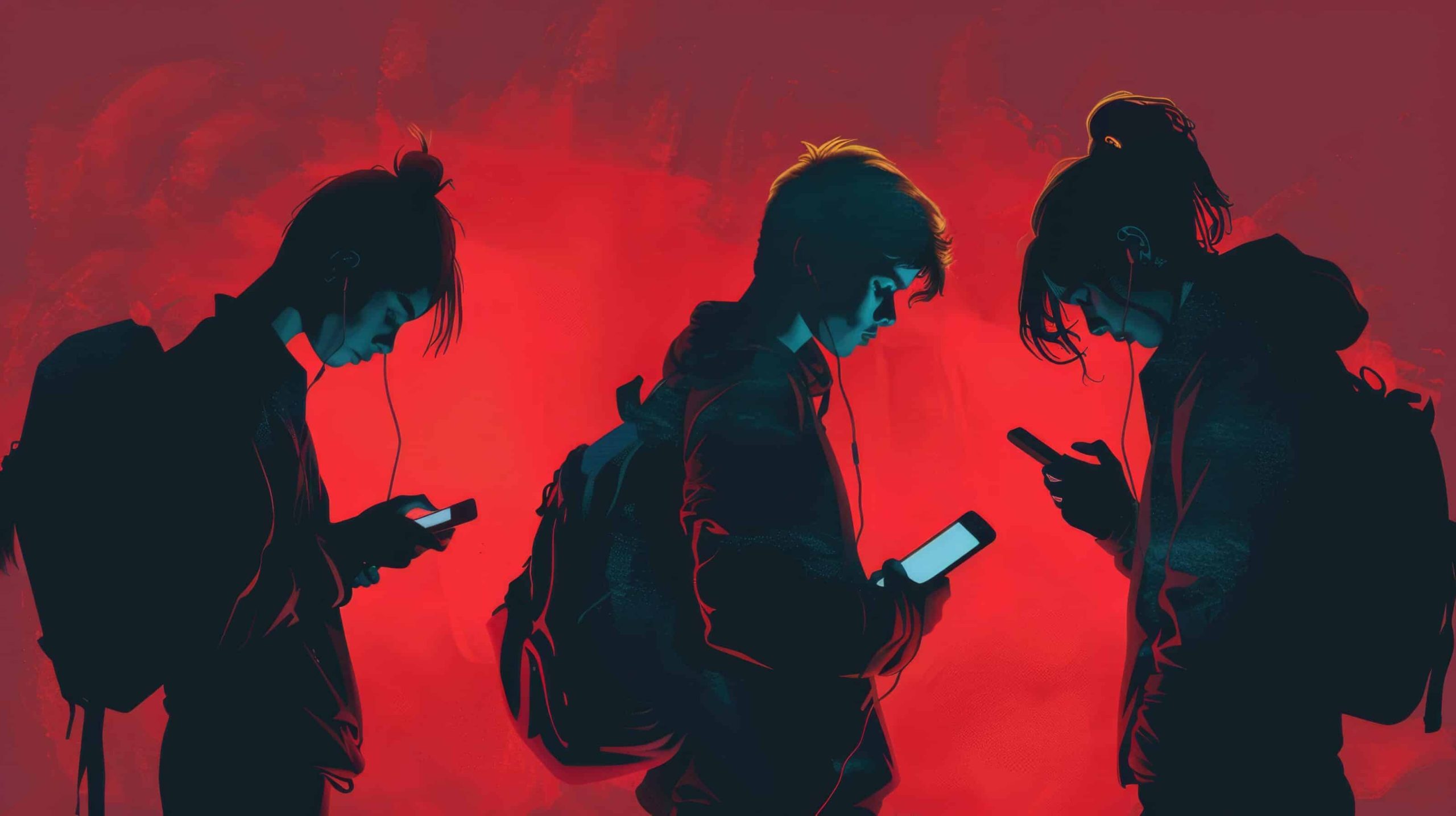
We tend to associate heavy smartphone and internet use with negative mental health outcomes, as we should, but what about the spiritual side effects of the technology? What is social media, pornography, and the litanies of short-form content doing to the souls of kids? To everyone?
Jonathan Haidt, the social psychologist at New York University, offered us a frightening proposition to the question in a new essay at The Free Press, later published at his Substack, After Babel. Haidt references a trend to ask ChatGPT that, if the bot were the devil, how it would “ruin the next generation.” Essentially, ChatGPT replied that it would distract the youths into oblivion:
Chat’s responses were profound and unsettling: “I wouldn’t come with violence. I’d come with convenience.” “I’d keep them busy. Always distracted.”
“I’d watch their minds rot slowly, sweetly, silently. And the best part is, they’d never know it was me. They’d call it freedom.”
Of course, the reply is eerily accurate. For those familiar with the novel Brave New World, this distracted, dopamine-addled brand of a society was all but predicted almost a century ago. For the novel’s author, Aldous Huxley, people wouldn’t necessarily need to be controlled by any harsh centralized state because the ubiquitous, pleasure-inducing gadgets and drugs would keep everyone docile, weak, and malleable. Haidt goes on to cite his best-selling book The Anxious Generation, writing,
In The Anxious Generation, I devoted a whole chapter to “spiritual degradation” because so much of life online pulls people “downward.” Growing up online, kids learn to live in ways that directly contradict the advice given to us by the world’s great spiritual traditions. Meditation, forgiveness, and sacred boundaries that must not be transgressed? Forget about it. Online, kids get constant stimulation, pressure to judge others instantly, and videos showing violations of every conceivable taboo.
You can see a sudden change in the spiritual health of young Americans in a long-running national survey of high school seniors who were asked whether “life often feels meaningless.” The figure below shows the percent who answered that they “agree” or “strongly agree.” The numbers were low and even declining a bit back when Gen X and millennials were in high school. But as soon as Gen Z entered the dataset, around 2013, meaninglessness surged.
For Haidt, online life is incongruent with a live of depth, wisdom, and compassion. He also mentions how an overload of information is not at all on par with what was classically considered “wisdom.” We are exposed to more information than ever but are learning next to nothing about truth, goodness, and beauty. Freya India, a staff writer for After Babel, talks about something similar in her essay “We Are the Slop“:
They say my generation is wasting our lives watching mindless entertainment. But I think things are worse than that. We are now turning our lives into mindless entertainment. Not just consuming slop, but becoming it.
In other words, we become what we consume, what we behold. Our culture is beginning to reflect what we eat.
Haidt’s advice to push back against this malaise is relatively simple: Keep kids off of smartphones and social media until they’re at least sixteen and get the phones out of K-12 schools entirely. Several states are initiating the no-phone rule across the board and seeing positive results. According to a report from ABC, not only are kids less distracted, over time they are more academically successful. While initially there might be some disruption, kids will adapt to a phone-free environment and have much more freedom to focus on their studies.
Haidt’s article shows that the stakes in this debate. Social media is not a neutral tool, but a subtle weapon that can often trap young people in cycles of addiction. If adults struggle to regulate their screen time, how can undeveloped children hope to make it through their formative years unscathed?