



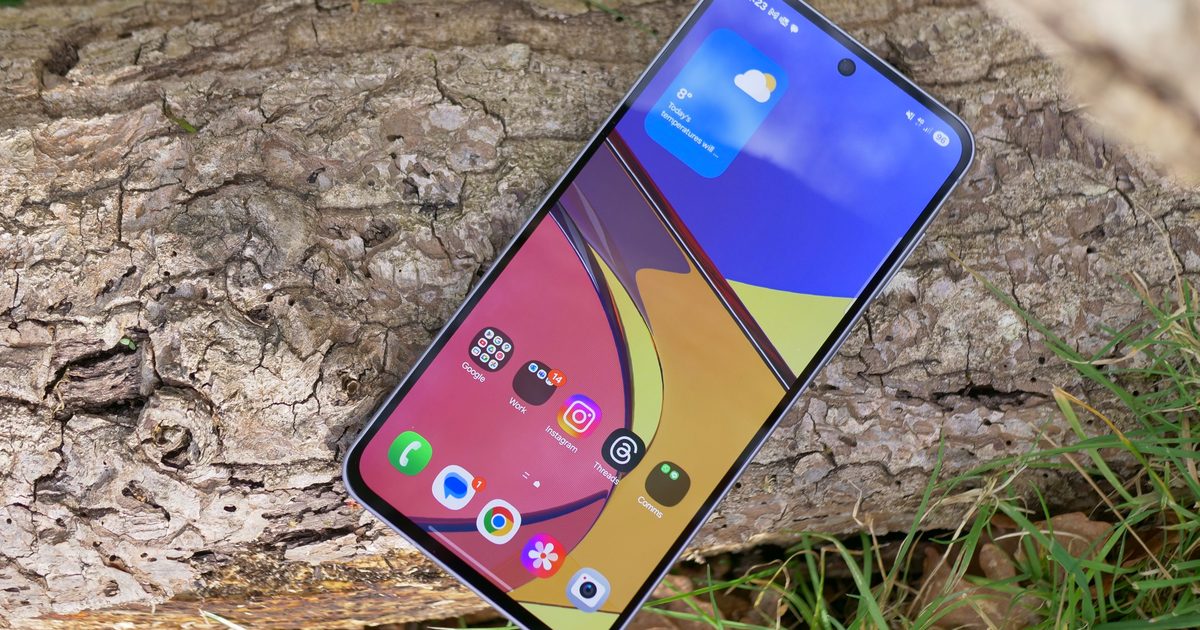
Samsung’s top-end phones, like the recent Galaxy S26 series, are some of the most talked-about Android mobiles out there… but they’re not the company’s most successful. Year after year, the company’s affordable Galaxy A phones smash the Galaxy S ones in terms of sales (according to Counterpoint Research), being trumped only by the iPhone family in terms of overall sales each year.
This all goes to show that affordability trumps feature-set for most buyers: fancy tools like the Galaxy S26 Ultra’s Privacy Display may turn heads, but wallets are won by condensing Samsung’s coolest ideas into a more affordable package. Mobiles like the Galaxy A56 prove themselves dependable and affordable, and that’s what people want, especially when they’re near-indistinguishable from Galaxy S phones.
But with Samsung throwing all of its new hardware and software into Galaxy S phones, what does it save for the Galaxy A models? And how does it make sure there are affordable options available for buyers?
At MWC 2026 I spoke to Annika Bizon, Samsung UK’s VP of Product and Marketing, to find out about the company’s vision for affordable smartphones – and a few other things too. And before you get excited: Galaxy A37 and A57 leaks hadn’t begun then, so don’t expect commentary on specific phones.
From Galaxy S to Galaxy A
Affordable phones just can’t have all the features of a top-end flagship. And what I was most interested to learn, is how Samsung decides what to cut and what to keep.
“We look at [the phones] and ask ‘what does the consumer use on those phones, and what do they need,’” Bizon explained, “It’s an entry phone because not everybody wants everything.”
Galaxy A-series phones I’ve tested in the past keep the software and display of the premium models, but are weaker and with less powerful cameras. “Every single phone we bring to market is designed for audiences, and affordability does play into that.” I was told.
But how does a buyer decide which to pick up? “If you look at the FE range, you look at the A series – they’re amazing phones, and it depends where you want to be,” Bizon explained, likely referring to the sliding scale between the A1X phone and A5X. Each costs a little more, and offers a little more for that spend.
Another way Samsung offers affordable gadgetery is by its Certified Re-Newed initiative, which has existed in the US for a while but recently rolled out to more regions including the UK and Germany.
“We want to make sure the resale value of all of our phones is as high as it can be,” Bizon explained, “we’re putting a brand-new battery in it, giving it a new IMEI, making sure it’s reboxed: it’s perfect.” According to its website, the program sees traded-in phones get appraised by experts, replaced when necessary and repackaged to be as good as new.
Certified Re-Newed sees Samsung sell past-generation phones for about $100-$200 cheaper than their new cost. At the time of writing, it’s only available on Z and S phones, and goes beyond simple refurbishing in a few key ways, to keep a handset lasting a lot longer: “That’s our commitment: to make sure no matter who you are or how you want to use your phone, you get the best of Samsung.”
How AI is meant to work
Some features have to be cut on affordable phones, but AI isn’t one of them. Bizon told me about the “800 million AI-enabled Galaxy devices” out there. So amid rising fears around the ‘AI’ buzzword, does the company think the average phone buyer wants this?
“We talk about AI like everyone knows what everything is in AI – most people don’t.” Bizon explained: “They just go ‘does it work’. The best infrastructure is when it’s invisible, and for most of our consumers, the AI they use is.”
I was given a metaphor to explain it: “When you walk into a house and turn the lights on, you don’t worry about how the electricity got there. You worry that it works.” Many Galaxy AI features are ones designed for convenience, like Audio Eraser which makes your sound files easier to hear, or Now Nudge which gives context-aware suggestions in chats.
Everyone I know who owns a Galaxy A phone, is an ‘average’ phone user, who doesn’t care much about specs or features. So they’d appreciate these AI features most: ones that naturally become part of their phone use experience, without having to change habits. Or, as Bizon says, “bringing more personalized experiences to you.”
For the last few years, Samsung has been gung-ho about its AI offerings, which was reiterated in my chat: “Everything we do now has AI at the centre, as we believe the experience is better when you’ve got Galaxy AI in your pocket, on your ears, on your wrist.”
A Galaxy of gadgets
I was curious about how Samsung devices get designed in an AI era, specifically the new phones and Galaxy Buds 4 Pro, which have some unique features if used together. I asked whether they were built from the ground up in this way, or created as distinct entities.
“I think it’s both,” Bizon explained, “We’ve got to look at it and go ‘the S series is our most beautiful flagship, and we’ve got to make sure we bring products that sit alongside at the same levels of quality’.”
“However, they’ve got to work independently, for anyone who says ‘I’ve got an S25 device and I want to have the best buds. All of those things work independently, but together.”. Suffice to say, the Galaxy Buds 4 Pro work just as well alongside S25 phones, as S26 ones (though some features are missing when used with non-Samsung handsets).
And what about designing the actual AI features: do they have to be adapted for the range of devices and users they’ll see? “Some of the principles are the same”, I was told, “but how you use it is different”.
“For example if you have a tablet and you’re into creativity, you’ll want a slightly different experience than something you would on your phone. On your phone, things like Now Nudge are more relevant for me, because it’s helping me guide my day through my calendar. I’m using my phone all the time and so I need it to be my companion in my pocket.”
“Certain things you’d naturally use, probably a bit more on a tablet, because it’s designed for creativity, for making the most incredible pictures. So the actual technology is the same, but enabled in different ways.”
New Samsung Galaxy A-series phones are expected in the coming weeks or months, with foldables and tablets due later in the year. Judging by what I was told in the interview, I’m expecting to see new handsets that take the Galaxy S26 AI tools, and adapt them for the gadgets’ buyers.