



This article, NIH Bans Funding of Fetal Tissue Research | National Review is republished from National Review with the permission of the author.
After restricting funding for primate research for ethical reasons, the National Institutes of Health has followed up by banning funding of fetal tissue research. From the NIH press release:
The National Institutes of Health (NIH) today announced a new policy ending the use of human fetal tissue in NIH-supported research, marking a significant milestone in the Trump Administration’s efforts to modernize biomedical science and accelerate innovation.
Effective immediately, NIH funds will no longer be used to support research involving human fetal tissue from elective abortions. The policy applies across the NIH Intramural Research Program and all NIH-supported extramural research, including grants, cooperative agreements, other transaction awards, and research and development contracts.
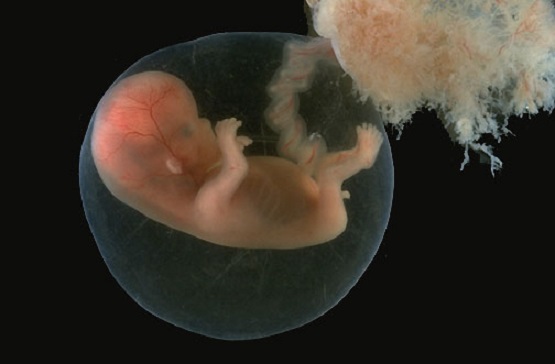
We have to remember the gruesomeness of some of this research: For example, the experiments in which the scalps of 20-week aborted fetuses were grafted onto rodents.
Some might ask what the difference is between using cadaver tissue and aborted fetal tissue? If that argument referred to the bodies of babies obtained after natural miscarriages, the analogy would be apt.
But abortions are about intentionally destroying unborn babies, not natural death. For many, that’s a distinction with a huge difference.
That reasoning is amplified in cases in which the abortion was done in such a way as to ensure the obtaining of fetal organs and tissues, which a secretly taped Planned Parenthood official admitted happened in the David Daleiden stings.
In a statement, NIH Director Dr. Jay Bhattacharya said that the use of fetal tissue was greatly reduced in recent years. Moreover, he sees the potential to reduce the funding of embryonic stem cell research:
NIH will continue to assess other research areas ripe for modernization and will engage the community in identifying emerging areas in which additional investments could bolstered alternative, validated models. For instance, NIH will soon seek public comment on the robustness of emerging biotechnologies to reduce or potentially replace reliance on human embryonic stem cells. By allocating our resources to more utile technologies we can advance scientific discovery and ensure better health outcomes for all Americans.
Back during the George W. Bush administration, embryonic stem cell research was touted — ridiculously — as leading to immediate CURES! CURES! CURES! But it was mostly hype. In contrast, adult stem and induced pluripotent stem cell research are of great use both in research and in many efficacious therapies. Funny how that worked out.
While I doubt that we can ever completely eliminate animal studies — we can and certainly should reduce these studies — I am hopeful about the prospect for moving the means of research away from using destroyed nascent human beings to other modalities. Good on Bhattacharya for placing great emphasis both on pursuing solid science and maintaining proper and humane ethical boundaries. A health science sector needs both.