



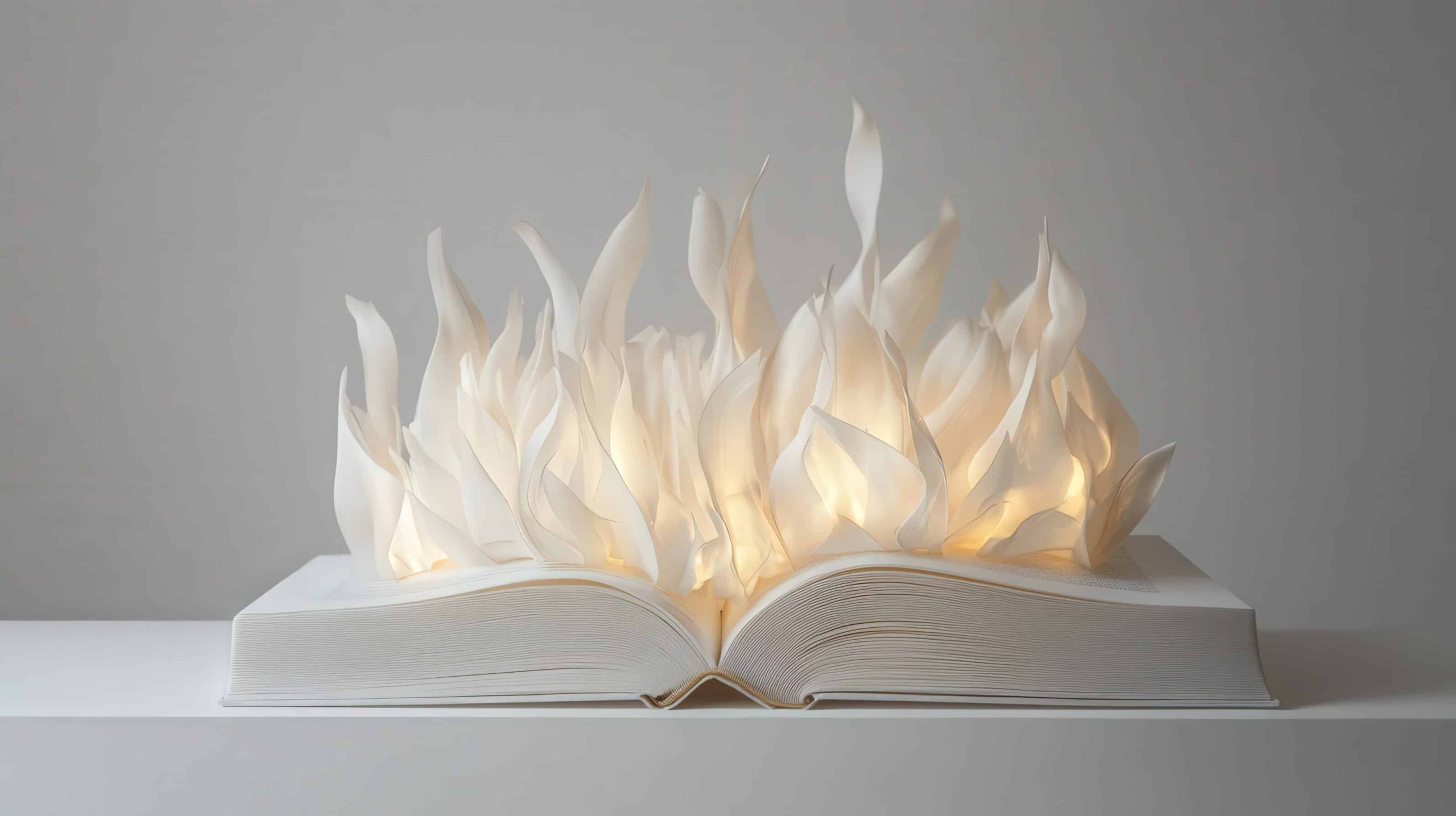
A trailer for a new CBS 60-Minute episode shows the novelist Margaret Atwood observing her bestselling book The Handmaid’s Tale going up in flames, with an ominous caption reading: “Margaret Atwood, author of 64 books including “The Handmaid’s Tale,” has seen her work banned for content deemed overly sexual, morally corrupt, and anti-Christian.”
According to the CBS write-up on the episode, The Handmaid’s Tale has sold more than $10 million copies, although a number of school districts have chosen not to feature her titles:
Atwood’s own works have been subject to edicts and bans. Her works have been banned from 135 American school districts, according to PEN America, a nonprofit that champions free speech.
Atwood’s books have been banned for content deemed overly sexual, morally corrupt and anti-Christian. She said she was particularly peeved when a recent ban came from Edmonton, Alberta, in her own country.
Many people on social media pushed back against the claim that Atwood’s famous, bestselling book has in any way been “banned.” Here is one comment, among many, demonstrating the irony of the notion:
If you look closely at this image, you can see The Handmaid’s Tale on the left-hand side of the book table. Essentially, saying the book has been banned after it’s done so well commercially and is even advertised in major bookstores doesn’t seem all that realistic. Perhaps the disconnect amounts to a misconstrued notion of what qualifies as a legitimate book ban in the first place.
For instance, if an elementary school library refuses to feature a book because its content isn’t age appropriate, does that qualify as a book ban? People can debate the answer to that, but if the book remains available to purchase on Amazon and among bookstores across the country, it’s hard to believe the title is suffering from any kind of conspiratorial crackdown.
When considering severe book bans in history, like the Nazis destroying books by Jewish authors in the 1930s and 1940s, we get the picture of a calculated effort by a state power to silence a specific group of people. The censorship is designed to be total and non-negotiable. In short, the term “book ban” is a loaded term, and history is chock-full of ready examples of such totalitarian overreach. People are noticing that it’s strange, then, when a bestselling novel that anyone can buy with a single thumb tap is in the list of banned titles. Definitions of the terms really matter in this case.