



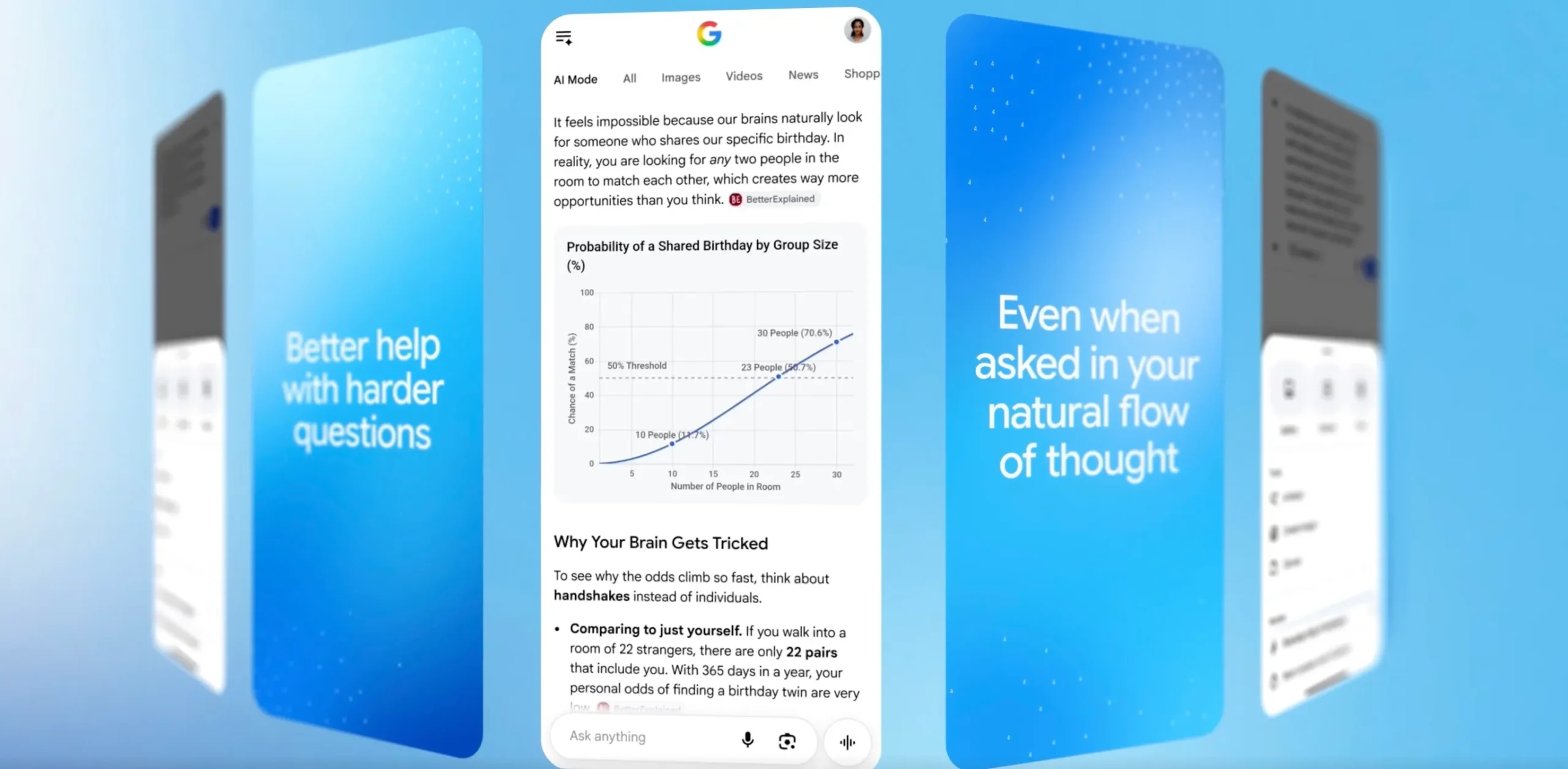
Google Search is getting its biggest model upgrade yet, and it changes how you should ask questions. The new Gemini 4 Hydrogen model, which Google calls its “biggest model improvement to Search yet”, is rolling out to AI Mode with better handling of complicated questions, multiple-part queries, highly specific requests and even confusing typos. Here is what actually changed under the hood and how to ask Google Search complex questions to get the best answers.
What the Gemini 4 Hydrogen Upgrade Changes
Google’s frontier models, Gemini 4 Carbon and Gemini 4 Argon, are built for deep reasoning on hard problems. Hydrogen is different. It is designed for fast execution across agentic workflows, which means tasks where an AI carries out multiple steps on its own. Google says Hydrogen completes tasks 2.5 times faster than Gemini 3.8 Flash, its previous fast model, while still being smart enough to beat Gemini 4 Argon on the Artificial Analysis Intelligence Index at its default high thinking level.
That speed matters for Search, where answers need to arrive in seconds. With Hydrogen powering AI Mode, Google says the search engine now understands user intent more precisely, offers more helpful links, delivers richer visual responses and answers better across the languages AI Mode supports.
How Google Handles Complex Questions Now
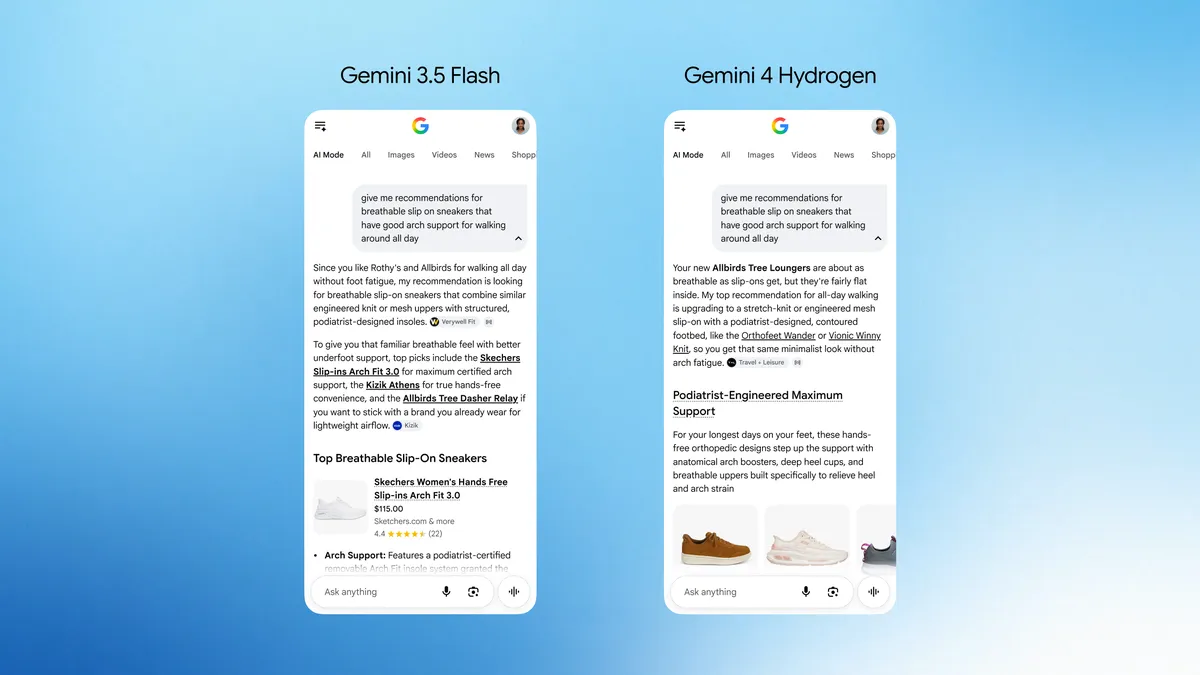
The upgrade targets the kind of query people actually type instead of the neat keywords of the past. According to Google, Hydrogen can handle questions asked in a natural train of thought, including those with multiple parts and highly specific requests. It is also better at navigating hard-to-understand typos, so a mangled product name or a half-remembered phrase is less likely to derail the results.
Under the surface, Hydrogen is better at following instructions and calling the right tools, which lets it address each part of a multi-part question precisely rather than answering the easy half and ignoring the rest. Its reasoning also improves Search’s fan-out technique, which breaks a single prompt into multiple subqueries. The practical effect is that you discover websites related to your question that a single keyword search would have missed.
AI Mode results are also getting more visual. Google says more images, structured responses, comparison tables and custom tools will appear as responses to queries, so a question like “compare X vs Y” can come back as an actual table rather than three paragraphs of prose.
How to Ask Google Search Complex Questions
- Write the full question, not keywords. Hydrogen is tuned for natural train of thought. Ask “what should I pack for a week in Ladakh in December with a toddler” instead of “Ladakh December packing”.
- Put multiple parts in one query. If you want three things answered, say all three. The model now addresses each part of a multi-part question instead of picking one.
- Be specific about constraints. Budget limits, deadlines, exact models and versions all help. Specific requests are one of the cases Google says improved the most.
- Do not overthink typos. Hydrogen is better at navigating confusing typos, so you can type the product name the way you remember it and still get the right answer.
- Use AI Mode for comparisons. Ask for a comparison explicitly and you are more likely to get the new structured responses and comparison tables instead of a wall of text.
- Follow up in the same thread. Because the model tracks intent across the conversation, refine your question in a follow-up instead of starting over.
- Check the linked sources. The fan-out technique surfaces related websites you might have missed, so scan the links instead of reading only the AI summary.
Where Hydrogen Fits in the Gemini Lineup
Google is being explicit that the most powerful model is not always the right one. Carbon and Argon handle deep reasoning for genuinely hard problems, while Hydrogen is the fast, cheaper option for everyday tasks. Google says Hydrogen can already work on its own for everyday work like writing code, running tests and verifying code changes, or it can be paired with Carbon and Argon in workflows that combine several models.
For Search, that division of labour means speed without a big intelligence penalty. The model that answers your query is tuned to move quickly across the subqueries in a fan-out search while still beating Google’s heavier model on at least one broad intelligence benchmark.
Example Queries That Work Better Now
The upgrade changes which questions are worth asking in full. These are the kinds of queries where the improvements show up most:
- Multi-part research: “What is the difference between OLED and mini LED for a bedroom TV, which is better for sports, and what should I budget under Rs 60,000” now gets each part addressed, often with a comparison table.
- Specific troubleshooting: “My 2023 Asus laptop fan runs loud after the Windows November update, is there a fix” benefits from the better instruction following and tool use.
- Messy real-world typing: Product names typed from memory, abbreviations and half-remembered phrases are less likely to produce irrelevant results.
- Shopping shortlists: Asking for options with explicit constraints, like price ceiling, size and use case, leans on the structured responses and comparison tables coming to AI Mode.
- Mixed-language questions: Queries that blend English with regional languages get better answers across the languages AI Mode supports.
What This Means for Everyday Search
- Long, rambling questions work better now. If you have been trimming your queries to keywords, stop. The upgrade rewards full sentences.
- Comparisons should feel more useful. Structured responses and comparison tables are exactly what shopping and research queries need.
- Multilingual answers improve too, which matters for anyone who mixes English with regional languages in the same query.
- More links, not fewer. The fan-out change is designed to surface websites you would otherwise miss, pushing traffic toward a wider set of sources.
If you do not see any change yet, do not worry. Model upgrades roll out gradually across regions and languages, and AI Mode itself is still expanding to more users and markets. The same query habits that work with Hydrogen also work with the older setup, so there is no reason to wait to start asking better questions.
What is Gemini 4 Hydrogen in Google Search
Gemini 4 Hydrogen is Google’s new fast model, now powering AI Mode in Search. Google calls it the biggest model improvement to Search yet, with better understanding of complex multi-part questions, typos and user intent, plus richer visual responses.
How do I get better answers from Google Search
Ask full, natural questions with all your constraints included, use AI Mode for comparisons, and do not worry about typos. The upgrade is designed to handle multi-part and highly specific queries.
Is Gemini 4 Hydrogen better than Gemini 4 Argon
They are built for different jobs. Argon is the deep reasoning model for hard problems, while Hydrogen is tuned for fast agentic tasks. Google says Hydrogen beats Argon on the Artificial Analysis Intelligence Index at its default high thinking level and runs tasks 2.5 times faster than Gemini 3.8 Flash.
Does the Google Search upgrade work in other languages
Yes. Google says the upgrade improves answers across the different languages supported by AI Mode, including better handling of queries that mix languages or use confusing typos.
