



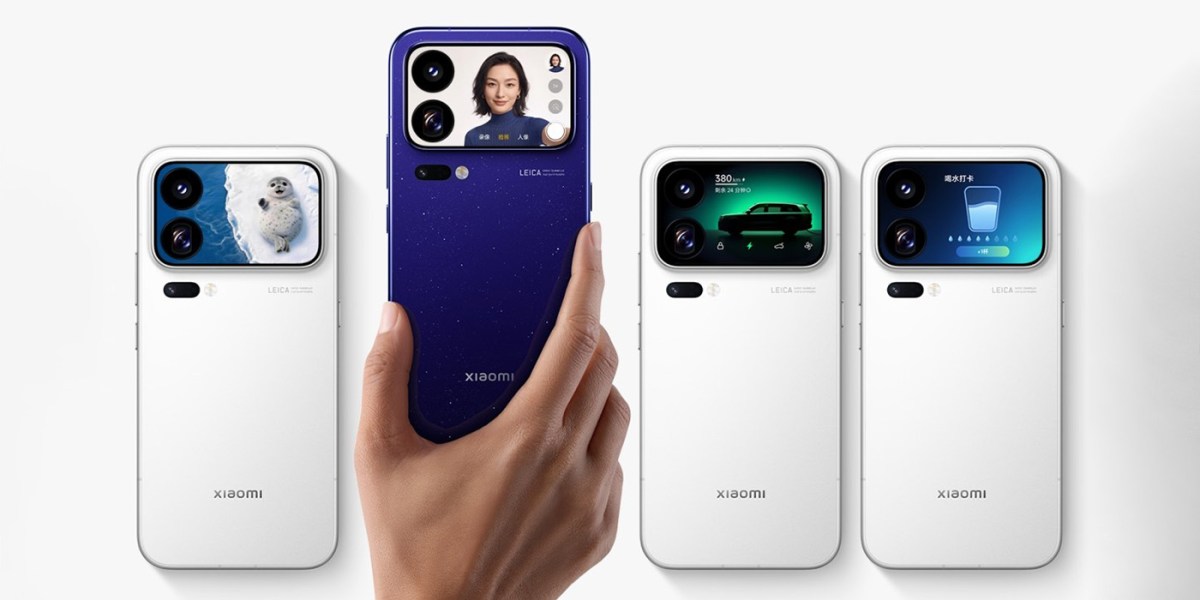
Phone makers have been putting second screens on the backs of phones for years, and almost every attempt has been a gimmick in search of a use. Xiaomi wants to fix that with the Xiaomi 18 Pro and Xiaomi 18 Pro Max. Their rear display, built into the camera island, runs Google Maps, YouTube Music, Spotify and other apps, and it even has a built-in GenAI tool that builds new mini apps from a text description. Here is what the Xiaomi 18 Pro rear display does, which apps work with it and where the series stands for an India launch.
What the Xiaomi 18 Pro Rear Display Is
On most phones with a rear screen, the second display shows a clock and a few notifications and then gets ignored. Xiaomi’s approach on the 18 Pro series is different. The camera island on the back is a full-colour touchscreen with impressively high resolution, shaped like the cover screen of a flip-style foldable such as the Galaxy Z Flip 8 or the Motorola Razr series.
That gives the rear display enough room to run real interfaces instead of static widgets. The details were shared through GSMArena and build on the AMA videos that Xu Fei, VP and CMO of Xiaomi Group, has been posting on X. Both the Xiaomi 18 Pro and the Xiaomi 18 Pro Max carry the feature.
Apps That Work on the Rear Screen
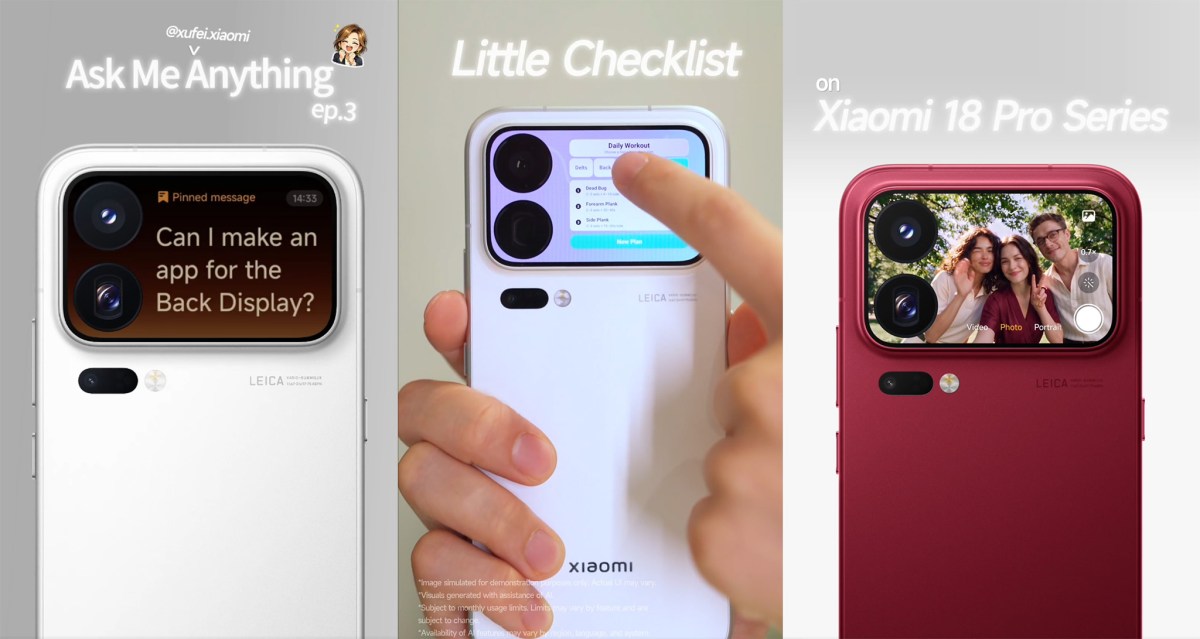
Xiaomi has named the first wave of official integrations:
- YouTube Music and Spotify: prominent play, pause and skip buttons, plus the artwork and name of the song currently playing. This turns the back of the phone into a proper music remote when the phone is face down on a desk or mounted on a car dash.
- Google Maps: a navigation progress indicator along with the next upcoming direction. Mounted in a car holder, the rear screen can show the next turn while the main screen stays free for other things.
- More apps are promised: Xiaomi says lots of additional apps are supported alongside these launch partners.
These are the exact jobs where a rear display makes sense: glanceable controls and one-line information that is not worth waking the main screen for.
The GenAI App Creation Tool
The more unusual feature is what Xiaomi calls custom app creation through GenAI. Beyond the official integrations, users can create their own rear display apps with a built-in tool. You describe what you want in plain language, and the onboard AI builds the app for you.
Practical examples could be a simple gym timer, a home screen for smart home controls, a counter for a cricket score or a custom camera remote panel. This is the part that separates the 18 Pro from earlier rear display phones, where the manufacturer decided the feature list and users lived with it. If the tool works as shown, the usefulness of the second screen scales with whatever owners can imagine, rather than with Xiaomi’s development bandwidth.
Details on how open the tool is, and whether created apps can be shared between users, have not been published yet. Those answers will decide whether the feature builds a small app community or stays a personal toy.
Confirmed Details So Far
Here is everything that is confirmed about the Xiaomi 18 Pro rear display at this point:
- Full-colour touchscreen built into the rear camera island, with high resolution
- Available on both the Xiaomi 18 Pro and the Xiaomi 18 Pro Max
- Official app support for Google Maps, YouTube Music and Spotify at the start
- Custom mini apps created on the phone through a built-in GenAI tool
- Global debut confirmed, with India certification progress reported by GSMArena
- Design language compared to flip phone cover screens such as the Galaxy Z Flip 8
Everything else, from panel size to battery impact and pricing, waits for the official launch event.
Will the Xiaomi 18 Pro Launch in India
The Xiaomi 18 Pro series is confirmed for a global debut, and the India picture is moving as well. GSMArena reports that the Xiaomi 18 Pro has moved a step closer to launching in India as certification listings appear, which is the usual trail a phone follows before an official Indian launch date.
Pricing and launch dates for India are not confirmed. For context, Xiaomi’s standard flagship launch pattern puts global and Indian announcements within weeks of each other, with Indian pricing set locally rather than converted from global figures. The base Xiaomi 18 has also been clearing certification with 100W charging, so the wider family is clearly close to release.
How Useful Is a Rear Display in Daily Use
History is not kind to rear screens. The reason most of them were written off as gimmicks is simple: if the panel only mirrors a clock, people forget it exists. Whether Xiaomi’s version escapes that fate depends on a few everyday scenarios:
- Desk use: phone face down during work or dinner, music controls and notifications available without flipping it over.
- Navigation: mounted face down or on a dash mount, the rear screen carrying turn prompts while the front screen handles calls or messages.
- Camera work: a high quality rear screen is a natural viewfinder panel for selfies and group shots taken with the main camera system, which usually beats front camera quality.
- Glanceable widgets: timers, scores, smart home controls. The GenAI tool is aimed squarely at this category.
The screen quality matters here. A low resolution panel makes text unreadable at a glance, which kills the whole idea. Xiaomi promising high resolution on a full-colour panel is the single most important spec detail shared so far.
Tips If You Are Waiting for This Phone
- Watch for the India certification milestone: once the device clears Indian regulatory bodies, a launch date usually follows within weeks.
- Decide between Pro and Pro Max on battery, not the screen: both models carry the rear display, so the choice comes down to the usual size, battery and camera differences.
- Check app support lists at launch: the rear display is only as good as the apps on it. Confirm your music and navigation apps of choice are in the supported list before buying.
- Look for real world GenAI app samples: once reviews land, test whether the app creation tool makes polished widgets or rough drafts.
- Compare with flip phones: if the rear screen is your main draw, a flip foldable offers a similar cover screen plus a foldable main display. Weigh both before spending flagship money.
What does the Xiaomi 18 Pro rear display do
It is a full-colour touchscreen built into the camera island that runs apps such as Google Maps, YouTube Music and Spotify with dedicated controls, and it supports custom mini apps created with a built-in GenAI tool. Both the Xiaomi 18 Pro and 18 Pro Max have it.
Is the Xiaomi 18 Pro coming to India
The series is confirmed for a global debut, and GSMArena reports the Xiaomi 18 Pro has moved a step closer to an India launch through certification listings. Pricing and dates for India are not confirmed yet.
Can I create my own apps for the Xiaomi 18 Pro rear display
Yes. Xiaomi’s built-in GenAI tool lets you describe the app you want in plain language and the onboard AI creates it. Examples could be timers, score widgets or smart home panels. How shareable or polished those apps are is still unconfirmed.
How is the Xiaomi 18 Pro rear display different from older phone rear screens
Most older rear displays were small panels limited to clocks and notifications. The Xiaomi 18 Pro version is a high resolution full-colour touchscreen that runs real apps like Google Maps and Spotify, plus user-built GenAI apps, which gives it actual daily uses.
