




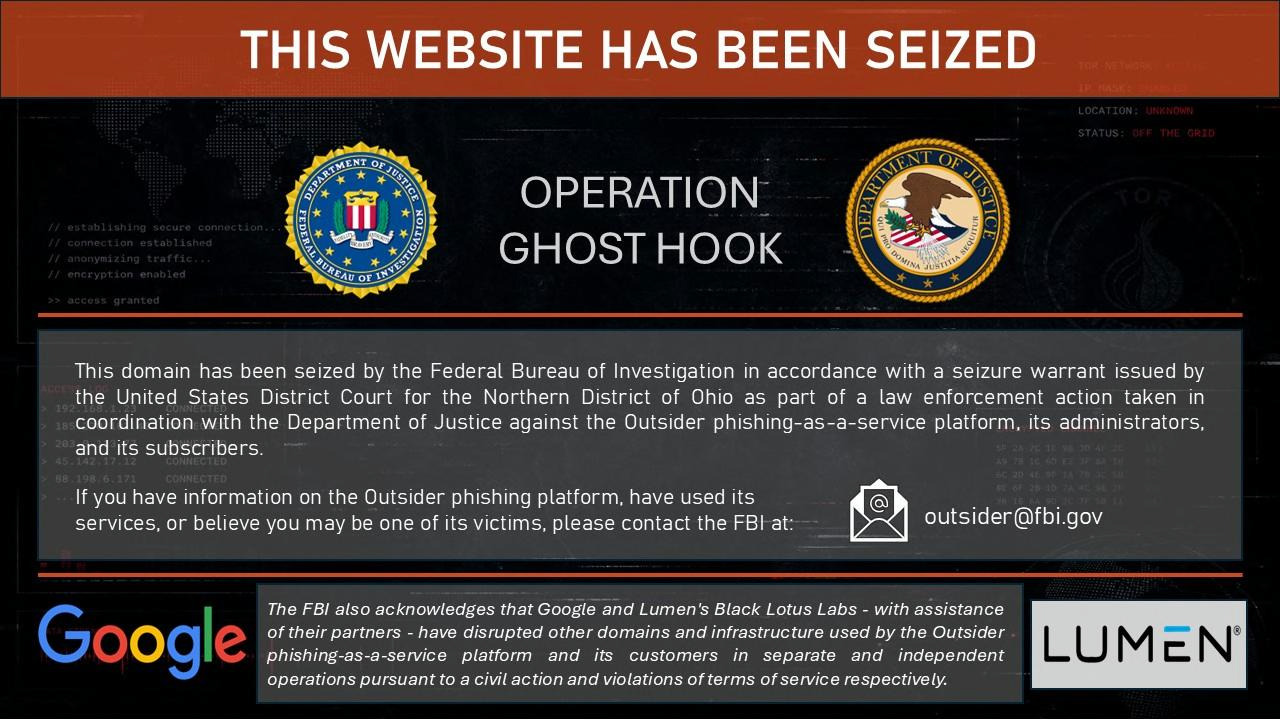
The FBI dismantled a Chinese phishing-as-a-service operation called Outsider Enterprise in a coordinated takedown involving Google and Black Lotus Labs. The operation used AI to generate phishing campaigns and managed more than a million fraudulent URLs across 9,000 fake websites.
How Outsider Enterprise Operated
Active since at least 2023, Outsider Enterprise sold phishing kits for as little as $88 through Telegram. The kits let buyers generate convincing fake text messages impersonating Google and other trusted brands. These messages were distributed through AT&T, T-Mobile, and Verizon networks.
Google’s analysis found that 2.5 million SMS messages were sent to Android users from Outsider Enterprise infrastructure during a two-week period in May 2026. Android users flagged 55,000 of those as fraudulent, but many more slipped through.
The Scale of Damage
Authorities estimate that phishing campaigns powered by Outsider Enterprise compromised more than 3.8 million credit card records, causing approximately $1.9 billion in total losses. Google believes hundreds of thousands of individual victims lost money to these scams.
The financial figure puts Outsider Enterprise among the largest phishing operations ever dismantled, and the AI-powered component makes it one of the first major cases where artificial intelligence was a core tool in large-scale cybercrime.
Operation Riptide Details
The takedown is part of the FBI’s broader Operation Riptide, targeting cybercrime infrastructure. During the technical phase, agents seized multiple administration servers, a Shopify storefront used by the operation, and around $100,000 in USDT from payment wallets.
The FBI also took over a Telegram bot linked to Outsider Enterprise that contained customer information for the phishing service. Thousands of phishing domains registered at U.S. providers now redirect to an FBI splash page.
Google’s Response
Google filed a civil lawsuit targeting Outsider Enterprise’s infrastructure and is coordinating with AT&T, T-Mobile, and Verizon to block fraudulent messages before they reach subscribers. The company is also advocating for seven bipartisan U.S. anti-scam bills, including the Stop SCAMS Act.
The Stop SCAMS Act would require the FBI to lead a coordinated national anti-scam strategy, bringing together federal agencies, law enforcement, and private companies to track, disrupt, and prevent fraud operations.
Android Protections
Google noted that Android users have access to AI-powered scam detection tools that warn about suspicious calls and block more than 10 billion malicious messages monthly. The company used the takedown to highlight these defenses while acknowledging that sophisticated operations like Outsider Enterprise still reached millions of victims.
Frequently Asked Questions
What was Outsider Enterprise?
Outsider Enterprise was a Chinese phishing-as-a-service operation that sold AI-powered phishing kits through Telegram for as little as $88. The kits generated convincing fake SMS messages impersonating trusted brands.
How much damage did the phishing service cause?
Authorities estimate the operation compromised 3.8 million credit card records and caused approximately $1.9 billion in total financial losses across hundreds of thousands of victims worldwide.
How did AI power the phishing attacks?
The operation used AI to generate realistic phishing text messages and create convincing fake websites at scale. This allowed threat actors to produce thousands of unique phishing campaigns without manual crafting.
What is the Stop SCAMS Act?
The Stop SCAMS Act is a bipartisan U.S. bill that would require the FBI to lead a coordinated national anti-scam strategy, combining federal agencies, law enforcement, and private companies to disrupt fraud operations.
Are Android users protected from similar attacks?
Google’s Android scam detection blocks over 10 billion malicious messages per month and warns about suspicious calls. However, sophisticated operations like Outsider Enterprise still reached millions of users before detection systems flagged the messages.
