



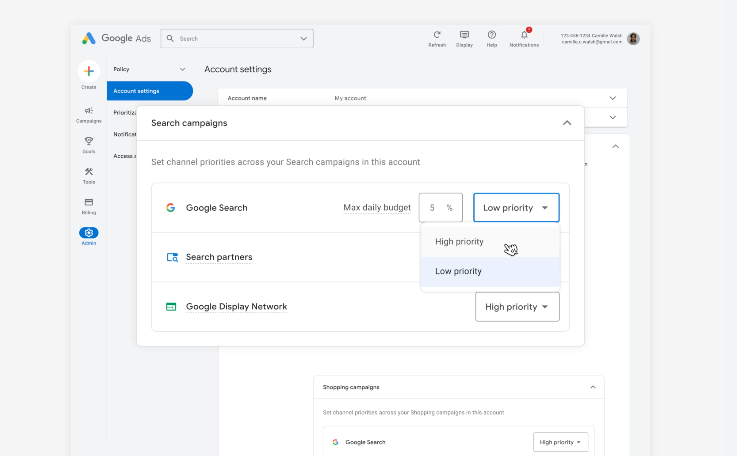
Google Ads has started rolling out channel prioritization and budget allocation controls, giving advertisers direct say over where daily budgets go. Instead of the old all-or-nothing choice between keeping Search partners or the Display Network on and off, campaigns can now rank channels as High or Low priority and cap how much spend goes to the low-priority ones.
What the new Google Ads controls do
Two optional settings are appearing across Search, Shopping, Performance Max, and Demand Gen campaigns. Channel prioritization lets you mark each channel grouping as High priority or Low priority. Budget allocation lets you set a maximum percentage of the daily budget that Low priority channels can receive. Google funds the High priority channels first and only then moves remaining budget to the rest.
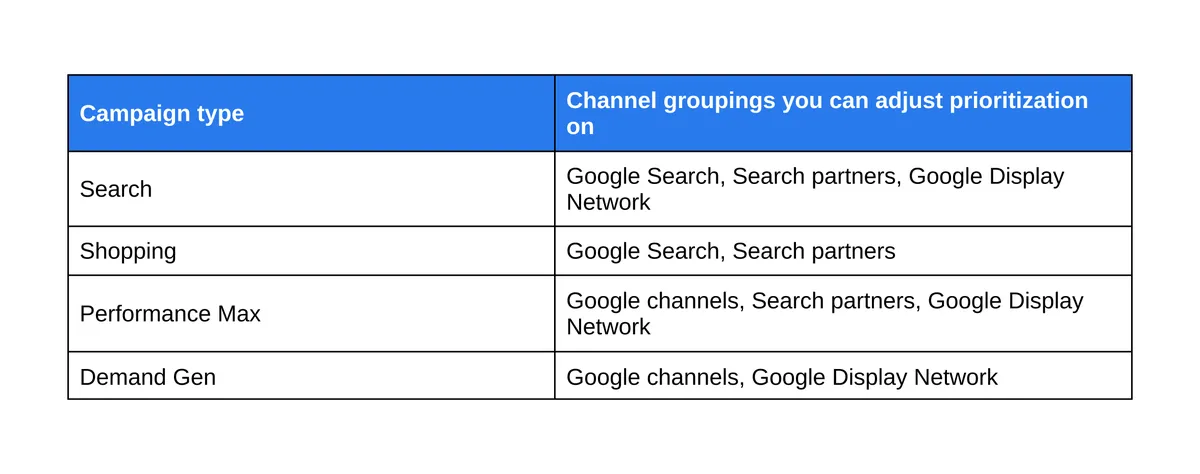
On campaigns running Target CPA or Target ROAS, the high-priority channels are funded first inside your performance targets. The channel groupings available depend on the campaign type. Search campaigns get Google Search, Search partners, and the Google Display Network. Shopping gets Google Search and Search partners. Performance Max covers Google channels, Search partners, and the Display Network. Demand Gen covers Google channels and the Display Network. For Performance Max and Demand Gen, Google groups Search, YouTube, Maps, Gmail, and Discover under the single Google channels label.
How Indian advertisers can use it
The practical win is safer testing. Say a brand wants to try Search partners traffic without risking its core Search results. The account can keep Google Search on High priority and allow Search partners no more than 15 percent of daily spend. If partner traffic performs badly, the damage is contained and easy to reverse.
The same logic works for Display Network inventory on Search campaigns. Rather than switching the Display Network off completely, hold it at Low priority with a small budget share and compare conversions week on week. Agencies managing festive season budgets for ecommerce clients will find this useful, since every rupee can be steered toward the channel that actually converts.
The catch with budget allocation limits
Google is clear that allocation caps work on a best-effort basis. The system aims to stay under the percentage you set, but it does not guarantee a hard spending ceiling. Also, channel prioritization by itself may change very little on Target CPA or Target ROAS campaigns that are not limited by budget, because those campaigns already spread spend based on performance signals.
February 2027 deadline for Search campaigns
There is one date to circle. Starting in February 2027, Google will remove the existing spend allocation setup for Search campaigns that have the Google Display Network enabled. Any advertiser who wants to keep the current configuration should set the Display Network to Low priority with a 50 percent budget allocation. Accounts that do nothing will see the old allocation control disappear.
The features roll out globally over the coming months. Google Ads has not announced any pricing change with this update, and there is no Indian-specific timeline yet, so availability will depend on when the rollout reaches each account.
FAQ
What is channel prioritization in Google Ads?
It is a setting that lets you rank channel groupings like Google Search, Search partners, and the Display Network as High or Low priority. Google spends on High priority channels first before moving budget to Low priority ones.
Does budget allocation guarantee a hard spend cap?
No. Google applies the percentage limit on a best-effort basis, so actual spend on Low priority channels can drift above the number you set.
Which campaign types support the new budget controls?
Search, Shopping, Performance Max, and Demand Gen campaigns all support channel prioritization and budget allocation.
What happens to Search campaigns in February 2027?
Google removes the existing spend allocation setup for Search campaigns with the Display Network enabled. To keep similar behaviour, set the Display Network to Low priority with a 50 percent budget allocation.
Will prioritization affect Target ROAS campaigns?
It mainly matters when the campaign is limited by budget. Campaigns that are not budget-limited may see little change from prioritization alone.
