



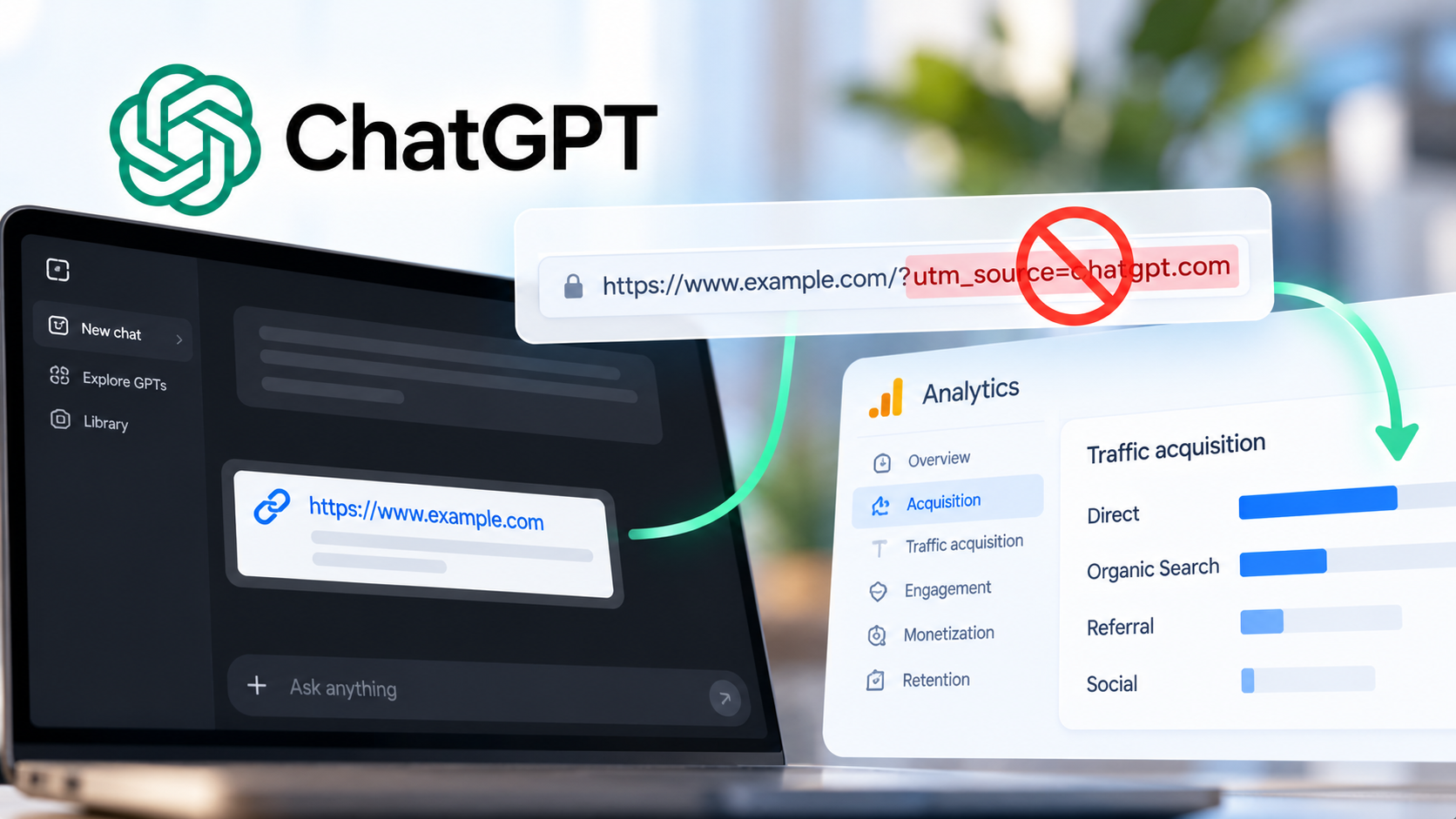
ChatGPT links have quietly stopped carrying UTM tracking parameters, and that change is playing havoc with marketing analytics. Visits that used to show up as ChatGPT referral traffic are now landing in the direct traffic bucket. The shift was spotted right after the GPT-6 rollout in October 2026, and marketers relying on AI referral reports need to look at their numbers twice.
What changed in ChatGPT links
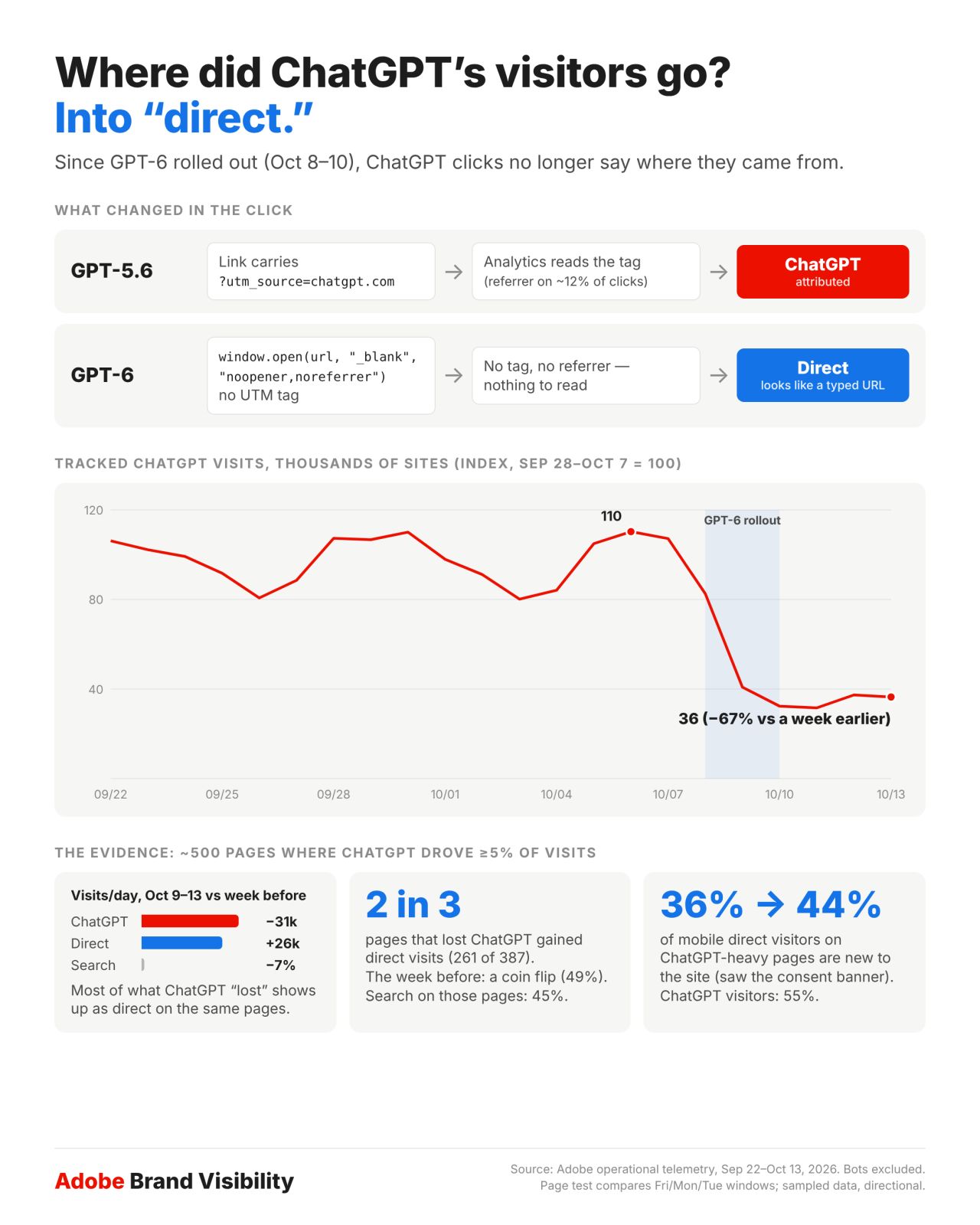
OpenAI introduced the utm_source=chatgpt.com parameter in June so that websites could see when ChatGPT sent them a visitor. Since the GPT-6 release, those parameters appear to be gone. Adobe’s Cedric Huesler reported that links are now opened in a way that suppresses referral information as well, so analytics platforms receive neither a UTM tag nor a referrer header.
When both signals are missing, tools like Google Analytics default to classifying the session as direct traffic. The visitor still lands on the page, but the source disappears from reports. For teams that track AI-driven discovery as a separate channel, the dashboard now shows a fake dip.
What the traffic data shows
Huesler looked at around 500 pages where ChatGPT had accounted for at least 5% of visits, comparing October 9 to 13 against the week before. ChatGPT traffic dropped by roughly 31,000 visits per day, while direct traffic on the same pages rose by roughly 26,000 visits per day. Two-thirds of the pages that lost ChatGPT referrals saw direct traffic go up. Search traffic dipped about 7%, in line with broader search trends.
The behaviour of the newly classified direct visitors matched the earlier ChatGPT visitors closely. That points to an attribution problem rather than a real drop in traffic from the chatbot. OpenAI has not confirmed whether the change was intentional, and the analysis cannot prove every missing referral came from the same cause, but the pattern is hard to ignore.
How marketers should handle it
Treat a sudden fall in ChatGPT referrals paired with a jump in direct traffic as a tracking change, not a campaign failure, until OpenAI clarifies the behaviour. Review referral trends, direct traffic, and landing page performance together before reading anything into ChatGPT’s value. In GA4, you can build a segment of direct landings on pages that previously earned AI referrals and compare engagement metrics week over week. Keep tagging your own campaign links as usual, since this only affects traffic coming out of ChatGPT itself.
Accurate attribution matters more each month as AI assistants become a real discovery channel. When platforms change how outbound links work, the measurement breaks quietly, and the numbers still look clean while the meaning changes underneath.
FAQ
Why did my ChatGPT referral traffic drop suddenly?
ChatGPT links no longer carry UTM parameters and suppress referrer data, so analytics tools count those visits as direct traffic instead of ChatGPT referrals.
How do I track ChatGPT traffic without UTM tags?
Compare direct traffic on pages that used to earn ChatGPT referrals, look for matching engagement patterns, and watch landing page trends together rather than trusting the referral report alone.
Did OpenAI remove UTM tracking on purpose?
OpenAI has not confirmed the change. The missing parameters were first noticed after the GPT-6 rollout in October 2026.
What is utm_source=chatgpt.com?
It is a UTM tag OpenAI added to ChatGPT links in June so websites could see visits coming from the chatbot. It appears to have been removed from outbound links.
