



One week after Anthropic became the first publicly traded frontier AI lab, one of its own mathematicians may have solved the most famous unsolved problem in mathematics. Levent Alpöge says he has a Lean-compilable proof of the Riemann hypothesis, a 167-year-old puzzle about the hidden structure of prime numbers and a USD 1 million Clay Millennium Prize problem. Within hours, Stanford mathematician Ravi Vakil published a competing, entirely human proof of the General Riemann hypothesis by postdoc Alessandro Masullo. Here is what has been claimed, what has actually been verified, and why the maths world is watching both announcements closely.
What the Riemann Hypothesis Actually Claims
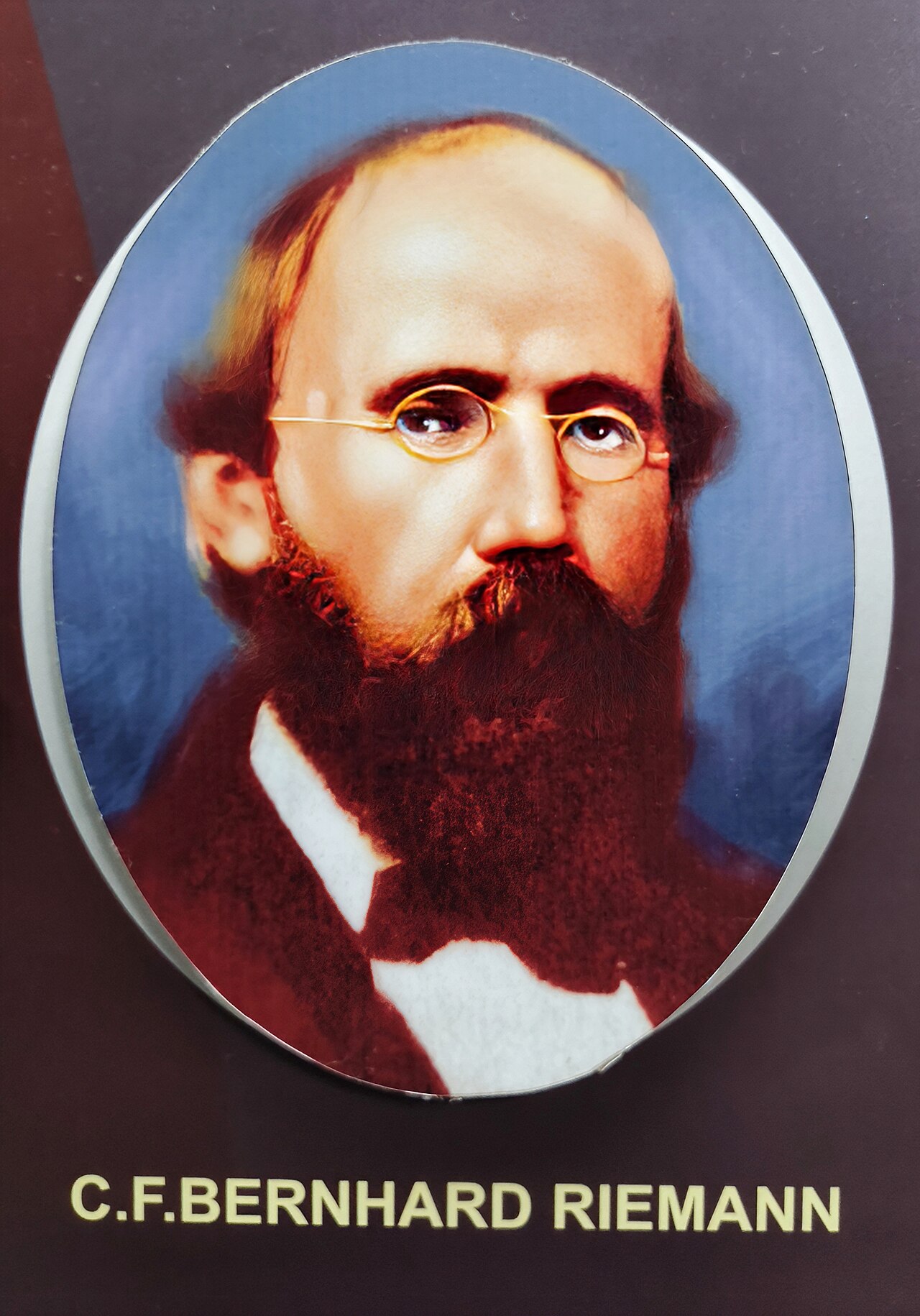
Proposed by Bernhard Riemann in 1859, the hypothesis says that there is a hidden structure underlying the appearance of prime numbers, pinned down by the zeros of the Riemann zeta function. If the claim holds true, it explains why primes behave as unpredictably as they do, and a large amount of number theory built on top of the assumption becomes proven fact. The Clay Mathematics Institute lists it among its Millennium Prize problems, with a USD 1 million prize for a correct proof.
That prize money is the least of it. A proof would touch cryptography research, random matrix theory and quantum physics, all fields that lean on the hypothesis as a working assumption. It is the kind of result that rewrites textbooks.
Levent Alpöge’s AI-Assisted Proof
Alpöge, a mathematician at Anthropic, announced his findings in an essay published on his website. In his own words, “the precise timing is horrible”, landing in the same week as his employer’s record-breaking IPO. He wrote that he messaged Anthropic CEO Dario Amodei on Sunday night to ask how to announce that he had found a Lean-compilable solution.
The verification method is what makes this announcement different from the usual claim of a famous proof:
- Lean is an open-source coding language used to express mathematical ideas as code so that proofs can be formally verified by a machine, not just checked by tired human reviewers.
- Independent compilation has been confirmed. Several mathematicians in the Lean community discussion, including MIT’s Andrew Sutherland, say they have successfully compiled Alpöge’s solution.
- The argument is heavy machinery. Community analysis of the proof describes a cohomology bound proved by what looks like an automorphy-lifting argument, using Galois representations attached to regular algebraic, polarized cuspidal automomorphic representations of GL_n over CM fields, along with base change, Jacquet-Shalika identities, Clozel’s purity and results attributed to Deligne-Ribet.
Alpöge is candid about the role AI played. He describes a “stream-of-consciousness jaunt” through the problem with Claude, saying the model “flew, and danced, and sparkled near that finish line”. He also admits feeling guilty about releasing a proof without a fully human-intelligible explanation, but said he “could not live” if he waited. He has committed to producing that explanation.
The Human Rival Answer
Before the maths world could even digest Alpöge’s claim, Ravi Vakil, a Stanford professor and president of the American Mathematics Association, posted a proof of the General Riemann hypothesis written by Stanford postdoc Alessandro Masullo. Vakil’s note is pointed: “it is all human, with no AI.”
According to Vakil, the plan had been to bring Masullo to Stanford for a year to polish the writing before announcing it to peers. The Alpöge announcement forced their hand. Masullo, who says the work is the result of 12 years of research, wrote a short introduction with a message aimed at researchers unsettled by the pace of AI-driven maths: “we are still here. We are very much alive. We are not going anywhere.”
The catch: because Masullo’s proof is not expressed in Lean, it cannot be machine-verified the way Alpöge’s can. It is far too early to say whether it checks out, or whether anyone fully understands either proof yet. For now, the Lean result carries more immediate credibility precisely because it compiles.
What Happens to the Millennium Prize
Neither announcement comes with a cheque attached. The Clay Mathematics Institute awards the USD 1 million Millennium Prize only after a proof is published in a journal of worldwide repute and survives scrutiny by the wider mathematics community. That process has taken years for other problems and has no fast track, even for machine-checked results.
There is also a real question the community is now debating: what counts as a human understanding of a proof that was assembled with an AI collaborator and verified by a compiler? Alpöge has promised a human-intelligible explanation of the argument, and until that exists and circulates, the proof is likely to stay in the “compiles but not fully understood” category. If both proofs eventually hold up, history is likely to record this as the week mathematics got its first genuinely AI-era result and its answer to it at the same time.
Why This Week Matters for AI and Mathematics
This is not an isolated event. Several threads converged in 2026:
- AI labs and mathematicians are racing. A dispute over a career-making maths problem earlier this year, where an NYU mathematician accused OpenAI of playing dirty, kicked off open competition between frontier labs and academics.
- Alpöge also co-released a Navier-Stokes proof. Alongside NYU mathematician Tristan Buckmaster, he published another important proof related to the Navier-Stokes equations, available as an open repository on GitHub.
- Formal verification is becoming the standard. Lean-compilable proofs can be checked automatically, which changes how maths claims get validated when they arrive at speed from AI-assisted work.
The practical takeaway for everyone watching AI: the models are now contributing at the very top end of research mathematics, but the announcements still need humans to explain, contextualize and confirm them. A machine-checked proof is only as good as the statement it proves, and understanding what that statement means for the rest of maths is a human job that has barely started.
Frequently Asked Questions
Did AI solve the Riemann hypothesis?
Anthropic mathematician Levent Alpöge claims a Lean-compilable proof found with heavy use of Claude, and independent mathematicians confirm it compiles in Lean. A separate, fully human proof of the General Riemann hypothesis by Alessandro Masullo was also published. Neither is fully validated by the wider mathematics community yet.
What is the Riemann hypothesis in simple terms?
It is an 1859 conjecture about the hidden structure behind how prime numbers are distributed. A proof would confirm a huge body of mathematics that currently assumes the hypothesis is true, and it carries a USD 1 million Clay Millennium Prize.
What is Lean in mathematics?
Lean is an open-source programming language used to write mathematical proofs as code. A Lean proof can be compiled and verified by a machine, which removes the “trust the reviewer” step and is why Alpöge’s announcement has gained quick credibility.
What happens next with the competing proofs?
Mathematicians are working through both results in community discussions. Alpöge has committed to writing a human-readable explanation of his proof, while Masullo’s non-Lean proof needs peer review before anyone can call it confirmed.
