



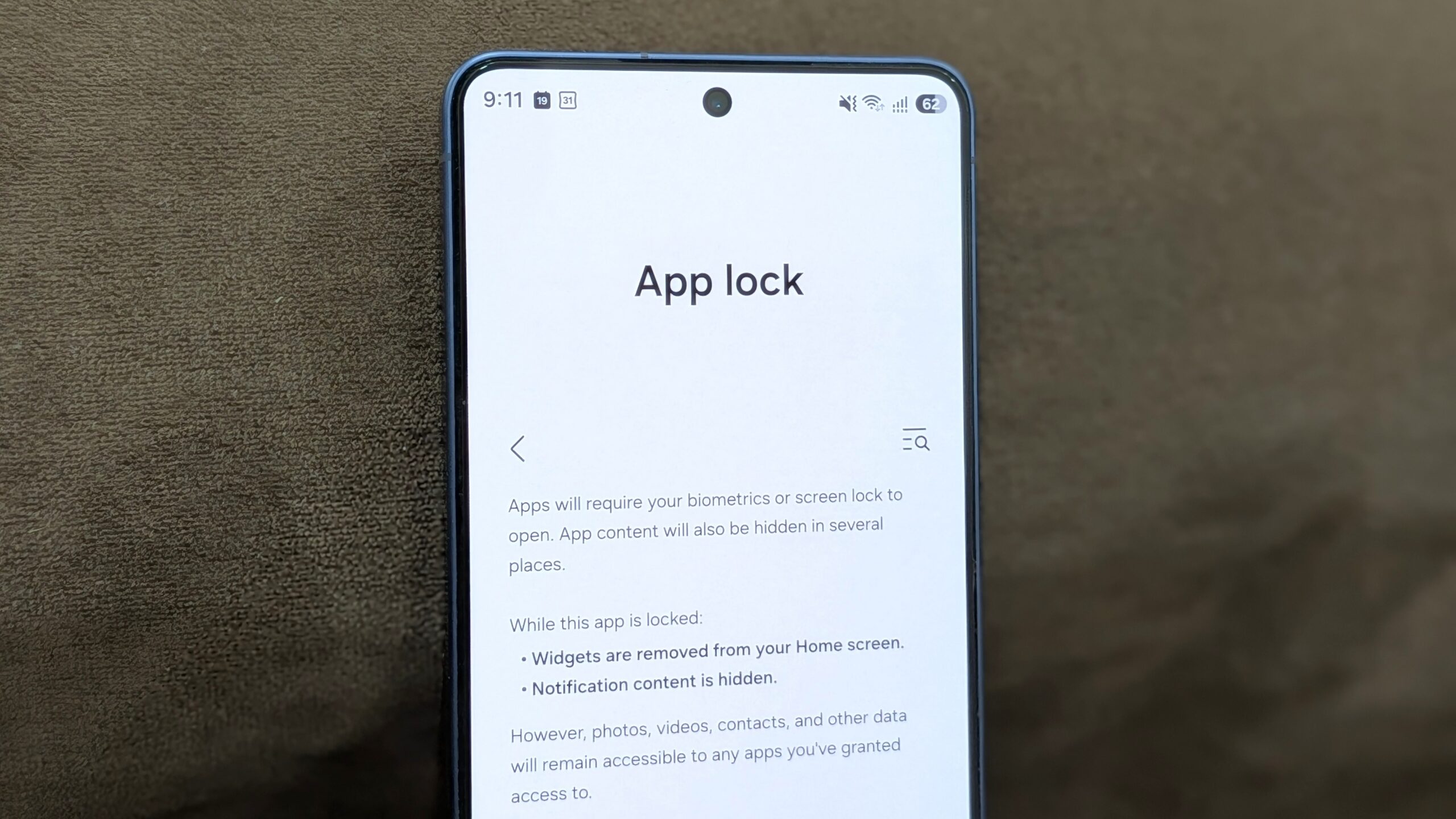
Google spent the last few years pushing new Android features through Google Play system updates so phones get them without waiting for a full OS upgrade. A lot of users assumed the new native app lock would ride that train to older phones. Google has now confirmed it will not. App lock depends on new APIs in the core Android platform, which means it cannot be backported, and the feature will only arrive with Android 17 QPR3 in the first quarter of 2027. Here is what the feature does, why older phones are excluded, and how to lock apps on your phone today.
Why App Lock Cannot Come to Older Android Versions
The confirmation came from Google’s Mishaal Rahman in a Reddit discussion, as reported by Android Authority on 20 November 2026. His explanation is straightforward:
- Android’s current app lock implementation uses new APIs in the core Android platform.
- Google Play system updates can only update certain parts of Android without a manufacturer software update, and these core changes fall outside that scope.
- So the feature needs a proper Android OS update, not a Play System update, which effectively shuts out phones stuck on older Android versions.
This matters because Google has increasingly delivered features outside major OS updates in recent years, so expectations were high. App lock turned out to be too deep in the system to move that way.
What Android’s Native App Lock Does
Android’s app lock is more than a simple PIN gate in front of an app. When a protected app is locked, the system also:
- Requires a fingerprint, PIN, pattern or password before the app opens.
- Hides the content of notifications from protected apps.
- Removes the app’s home screen widgets and shortcuts.
- Obscures app previews in the Recents menu.
- Hides direct sharing targets from protected apps.
That depth of integration is exactly why it needs core platform APIs, and why a Play System update cannot deliver it. The feature was restored in Android 17 QPR3 Beta 3 in October 2026 after an earlier removal, and Samsung launched its own native app lock in One UI 9.5 this week.
What Play System Updates Can and Cannot Do
Google Play system updates, also called Project Mainline, let Google patch parts of Android through the Play Store without waiting for phone makers. Over the years they have delivered everything from Bluetooth fixes to permission controls and even small features. But the update path has a hard boundary: it can only replace modules that sit outside the core platform.
App lock sits inside that boundary. It hooks into how Android launches apps, draws the Recents screen, and delivers notifications, which are core platform responsibilities. The lesson for users is worth remembering when the next big feature lands with a “coming to your phone” headline. If it touches the launcher, the notification pipeline or the app lifecycle, expect it to need a full OS update. If it lives in Google Play services or a Mainline module, it can travel further.
It is also worth separating the two updates your phone receives. Google Play system updates arrive through Settings under Security and privacy, while full Android version updates come from your manufacturer. App lock needs the second kind.
When Is App Lock Actually Coming?
Google’s product team plans to release app lock with Android 17 QPR3 in the first quarter of 2027. Two things follow from that:
- Phones that will receive Android 17 QPR3 should get it as part of that release.
- Phones that never got Android 17 will not get Google’s implementation at all.
There is one caveat. Manufacturers can build their own app lock implementations, and some have offered the feature for years. Xiaomi has had app locking in MIUI and HyperOS for a long time, and Samsung’s One UI 9.5 now ships native app lock as well. If your phone runs one of those skins, you may already have the capability, just not Google’s version.
Tips: How to Lock Apps on Android Today
Waiting until 2027 is not the only option. Depending on your phone:
- Check your manufacturer’s built-in option first. Samsung users can look under Settings for the new app lock menu in One UI 9.5. Xiaomi, Oppo, Vivo and Realme phones often have app locking under privacy or security settings.
- Use Secure Folder or equivalent. Samsung’s Secure Folder and similar encrypted spaces in other skins keep sensitive apps behind a separate lock.
- Third-party app lockers work, with caveats. They can gate apps behind a PIN, but they cannot hide notification content or Recents previews the way the native feature will, and you are trusting a third-party app with usage access permissions, so choose carefully.
- Keep your phone’s OS updated. If your device is in line for Android 17 QPR3, the official feature will land in Q1 2027. Pixel phones get quarterly releases first, and Samsung, OnePlus and others typically follow within a few months.
- Check your notification settings in the meantime. Even without app lock, you can hide sensitive notification content per app under Settings, Notifications, which covers one of the bigger privacy gaps the native feature will close.
- Use a strong screen lock as the baseline. Fingerprint or a long PIN in front of the device still protects everything behind it, including apps that have their own locks.
Frequently Asked Questions
Will Android app lock come to older Android versions?
No. Google has confirmed that the current implementation uses new core Android platform APIs and cannot be backported through Google Play system updates. Older phones will need an Android OS update to get it, and phones stuck on old versions will not receive it.
When is Android’s native app lock releasing?
Google plans to release app lock with Android 17 QPR3 in the first quarter of 2027. It was restored in the Android 17 QPR3 Beta 3 build in October 2026.
Does Samsung have app lock already?
Yes. Samsung introduced native app lock in One UI 9.5 this week, and Xiaomi has had its own implementation for years. Manufacturer versions do not depend on Google’s Android 17 release.
How do I lock apps on my Android phone right now?
Check your manufacturer’s privacy or security settings for a built-in app lock, use features like Samsung’s Secure Folder, or install a reputable third-party app locker. None of these hide notification content the way Android 17 QPR3’s native feature will.
