



[ad_1]
Due to investigations by a UK watchdog, the two companies may have to make some major changes

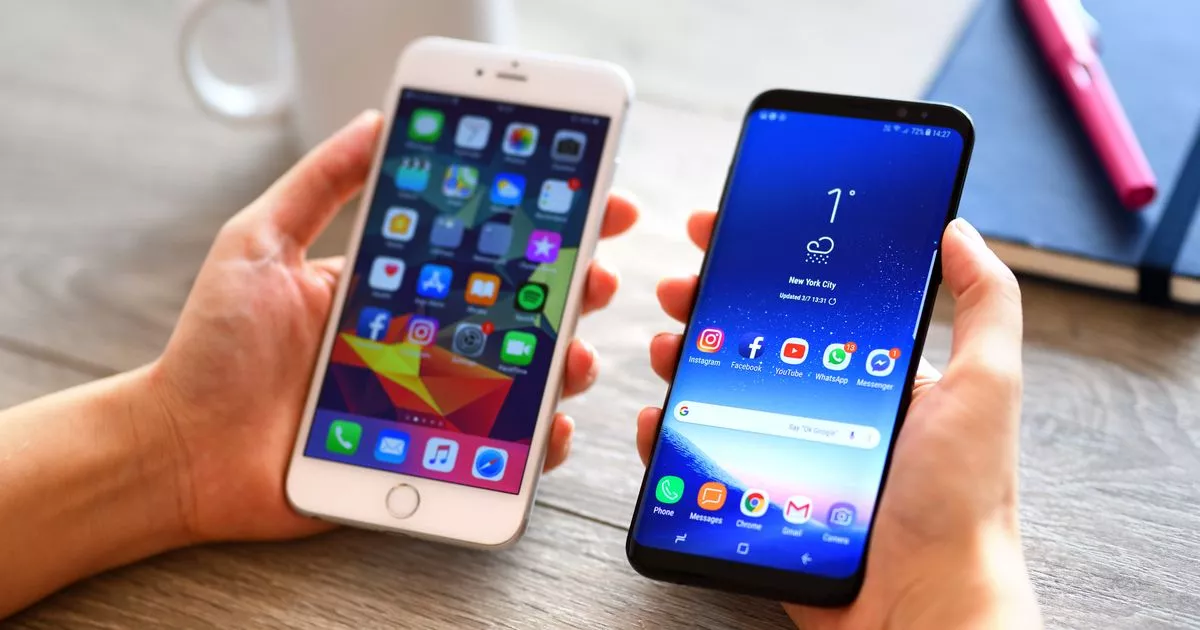
Apple and Google may face action over mobile phone dominance(Image: Getty)
Apple and Google might have to make major changes to their mobile platforms because their existing regulations could be “limiting innovation and competition”, according to the UK’s competition authority. The Competition and Markets Authority (CMA) has said that both tech giants hold significant and established market power.
It confirmed that the two organisations received what’s called ‘strategic market status’ following an inquiry into their mobile platforms. This ruling allows the regulator to potentially step in and promote more competition, which it claims will be beneficial for consumers and businesses.
Around 90 per cent of smartphones in the UK are powered by Apple or Google systems. This means the CMA’s move might change the way people use – and pay for – apps and services on the devices.
The CMA gained new powers at the beginning of the year to clamp down on players it believes are dominating digital markets. It launched investigations into Apple and Google’s mobile platforms, which incorporate their operating systems, including iOS and Android, app stores, and browsers.
Will Hayter, executive director for digital markets at the CMA, said: “Apple and Google’s mobile platforms are used by thousands of businesses right across the economy to market and sell products and services to millions of customers, but the platforms’ rules may be limiting innovation and competition. Having taken into account the feedback received since our proposed decision, we have today designated Apple and Google’s mobile platforms with strategic market status.”
Earlier this year, Sarah Cardell, CMA chief executive. said: “Apple and Google’s mobile platforms are both critical to the UK economy – playing an important role in all our lives, from banking and shopping to entertainment and education. But our investigation so far has identified opportunities for more innovation and choice.”
How has Apple responded?
An Apple spokesperson said: “Apple faces fierce competition in every market where we operate, and we work tirelessly to create the best products, services and user experience. The UK’s adoption of EU-style rules would undermine that, leaving users with weaker privacy and security, delayed access to new features, and a fragmented, less seamless experience. We’ve seen the impact of regulation on Apple users in the EU, and we urge the UK not to follow the same path.”
What is Google saying?
Oliver Bethell, Senior Director for Competition at Google said: “Today the CMA designated Google’s ‘Mobile Platform’ (Android, Play, Chrome, Blink) with ‘strategic market status’. This decision is disappointing, disproportionate and unwarranted.
“The UK’s new digital markets regime was introduced with the promise of being pro-growth and pro-innovation, with the CMA emphasising that its work would be highly targeted and proportionate. In this context, we simply do not see the rationale for today’s designation decision.
“Android and Chrome were built on the idea of creating more choice, not less. Anyone, including our competitors, can customise and build devices with the open-source Android operating system – for free. And while Google Play helps people download apps on their devices, if you don’t find the app you’re looking for, you can download apps from a rival store or directly from a developer’s website – something the majority of Android users actually do, and something other mobile platforms restrict.
“As a result, there are now 24,000 Android phone models from 1,300 phone manufacturers worldwide, facing intense competition from iOS in the UK. More than two thirds of UK Android devices come with a non-Play app store preloaded and users can access 50 times more apps on Android than iOS. Non-Chrome browsers are installed on 70% of UK Android devices. As the CMA has already acknowledged, Google does not use “its position as an operating system or mobile browser engine to favour Chrome”.
“The benefits to UK businesses and consumers are clear. Android generates over £9.9 billion in revenue for UK developers, supports over 457,000 UK jobs and gives customers a remarkable level of choice. Indeed, the CMA has itself found that 91% of UK consumers are ‘satisfied’ or ‘very satisfied’ with their Android mobile devices.
“Following the CMA’s decision today, our mobile business in the UK faces a set of new – and, as of yet, uncertain – rules. The CMA’s next steps will be crucial if the UK’s digital markets regime is to meet its promise of being pro-growth and pro-innovation.”

Apple’s John Ternus shares insight into the new iPhone
How popular is Apple and Google?
Apple and Google smartphones are very popular in the UK, but they occupy different market spots. Apple’s iPhones lead in high-end sales and have a loyal user base. They boast a large market share and millions of active users around the globe.
On the other hand, Google’s Pixel phones hold a much smaller share of the global market but are well-liked among a certain group of users and have a solid presence in specific markets like the UK, even though their overall popularity is just a tiny slice of what Apple has.
Google is also one of the biggest leaders in the search engine market. However, both companies have a stronghold over mobile platforms, app stores, and browsers.
Other big tech platforms are Microsoft (Windows, Bing, Office), Amazon (AWS, Appstore, devices), and Samsung (Tizen OS, hardware). In addition to these major players, there are plenty of other platforms out there, including open-source operating systems like LineageOS and Ubuntu Touch, along with various software and service providers like DuckDuckGo (search) and OpenStreetMap (mapping).
[ad_2]
Source link
