



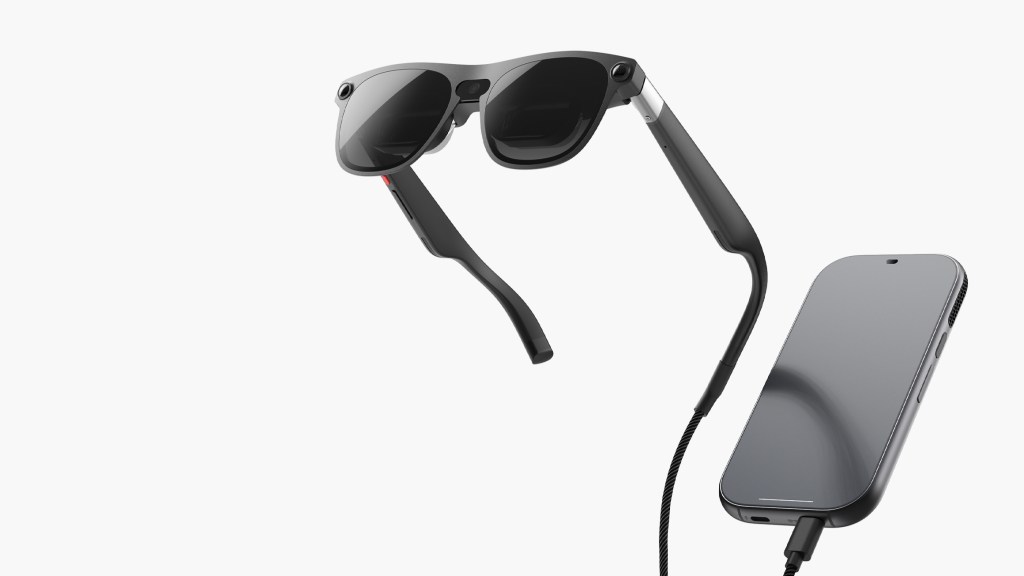
Google’s smart glasses push finally has a shipping product. At the Android Dev Summit on October 28, 2026, XREAL launched the XREAL Aura, the first wired XR glasses powered by Android XR, at a starting price of $1,279. The glasses run Gemini, project apps into a 95-degree field of view, and offload the heavy computing to a pocketable puck.
This post covers the display and chip specs, what apps launch with it, how it compares with Meta’s and Apple’s headsets, and where you can order a pair.
XREAL Aura: What It Is
The Aura is a pair of lightweight glasses with transparent lenses that project apps, shows and games into your field of view while you still see the room around you. Because the glasses are wired to a smartphone-like compute puck instead of carrying all the processing themselves, they stay lighter than standalone headsets and can push more performance.
- Platform: Android XR, Google’s operating system for extended reality devices
- Chips: Qualcomm Snapdragon Reality Elite platform in the glasses and puck
- Display: Sony Micro-OLED panels, 1200p resolution at 120Hz
- Field of view: 95 degrees
- Weight: 95 grams for the glasses, with a separate compute puck you carry
- Assistant: Gemini built in for help with apps, documents and what you see around you
- Price: Starts at $1,279
The design sits closer to Meta’s smart glasses than to the Apple Vision Pro, which is a full headset. On paper the display specs beat the Ray-Ban Meta Display, though the Aura is heavier at 95 grams versus 69 grams and requires the tethered puck. The wired design is a deliberate trade: the glasses stay light enough to wear for hours, and the puck carries the battery and processor load that would otherwise sit on your nose.
Apps and Gemini: What You Can Actually Do
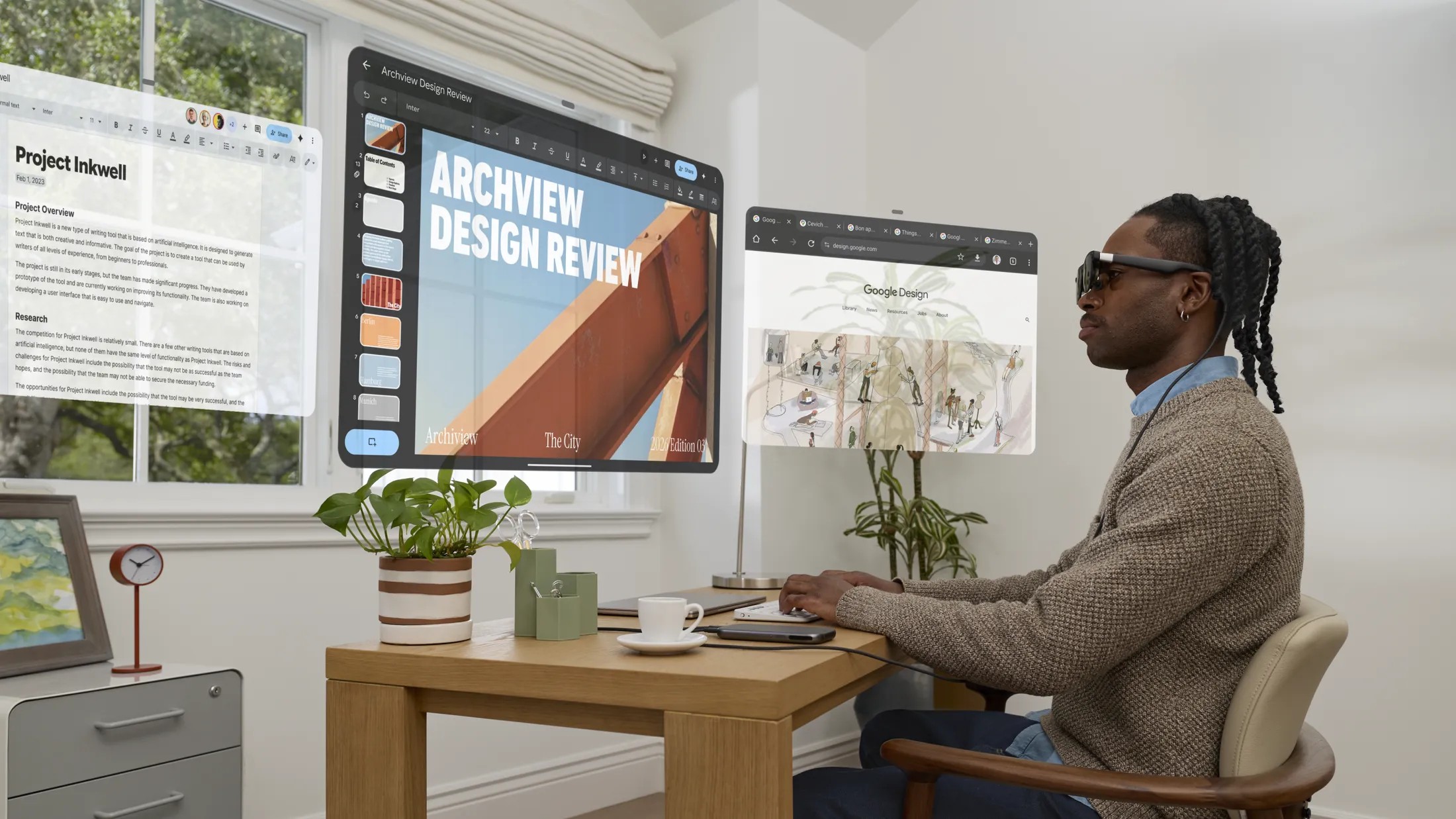
Google positions the Aura as a device for work, watching and play on what it calls a private, unbounded canvas. You can float multiple windows, view content in 3D and keep your surroundings visible at the same time. Gemini sits alongside your screens and can help with tasks across your apps, documents and environment in real time.
At launch, the Aura supports many popular Google Play apps and games alongside XR-specific experiences, including:
- The NBA App for Android XR
- Navatars
- Fallout: Factions
- Project Hail Mary: Journey Among the Stars
- The NASCAR XR App
- The San Francisco Ballet Company’s production of The Nutcracker
Google and XREAL teased the glasses at Google I/O in May 2026, so developers have had roughly five months to build for Android XR. The launch catalogue shows where Google expects demand: live sports, games and media viewing on a big virtual screen that travels with you. For travellers and hot-desking workers, the pitch is simple: your monitors fit in a small case.
Where to Buy the XREAL Aura
- Orders open October 28, 2026 in the United States, Canada and Korea, at xreal.com and BestBuy.com
- Japan: Orders open November 2, 2026
- Starting price: $1,279 in the US
- India: No India launch or pricing has been announced yet
How It Compares
- Versus Ray-Ban Meta Display: The Aura wins on display specs with 1200p Micro-OLED at 120Hz and a 95-degree field of view, but it is heavier at 95 grams and needs the compute puck. Meta’s glasses handle everything on the glasses themselves.
- Versus Apple Vision Pro: Different category. The Vision Pro is a full headset with its own computer. The Aura is a wired glasses design meant to be worn out and about.
- Versus XREAL’s earlier glasses: This is the first model running Android XR with Gemini integration and full Google Play app support, rather than acting mainly as a portable monitor for your phone.
The bigger picture is Google’s platform play. Just as it did with Android phones, Google is leaning on hardware partners like Samsung and XREAL to spread Android XR across different form factors and price points. Meta is expanding its own smart glasses push at the same time, and both Apple and Google are clearly treating glasses as the next screen after the phone.
Tips Before You Order
- Check your phone situation first. The Aura depends on its compute puck, so battery life and heat on that puck matter as much as the glasses themselves.
- Try before buying if you can. Best Buy demo units are the easiest way to check comfort at 95 grams and whether the display is sharp enough for your eyesight.
- Watch for prescription support. If you wear glasses, confirm what lens inserts XREAL offers in your region before ordering.
- Track the app list. The XR app catalogue is young. If you want a specific work or media app, confirm it is optimised for Android XR first.
What Android XR Means for the Platform
Google’s approach here mirrors its smartphone playbook. Instead of building one reference headset and keeping it exclusive, it is shipping the software and letting partners build the hardware. Samsung is working on its own Android XR devices, and XREAL is the first to market with glasses. For users, that means apps bought or installed on one Android XR device should carry over to others, exactly like phones and tablets.
That also shapes what you can expect after launch. Google handles the OS and Gemini updates, while XREAL manages the glasses and puck firmware. App support should grow fastest in categories where Google Play already dominates: media, games and productivity. The XR-specific titles at launch show where the early energy is, with live sports apps like the NBA and NASCAR experiences alongside games like Fallout: Factions.
There is a productivity angle too. Because the Aura keeps your surroundings visible, it works as a portable multi-monitor setup rather than a closed-off VR space. Plugging the puck into a hotel desk or a train tray table gives you a workspace that does not physically exist. Gemini can see what you see, so asking questions about a document on your virtual screen or a product in front of you is part of the design.
The build quality and privacy story also deserve a look before you buy. Transparent lenses mean people around you can tell you are wearing smart glasses, and how the Aura handles capture or recording indicators will matter at work and in public. Early reviews will show how the 95-gram frame feels after a full work session and how long the puck lasts driving a 120Hz Micro-OLED stream.
FAQ
What is the XREAL Aura price?
The XREAL Aura starts at $1,279 in the United States. Orders opened on October 28, 2026 at xreal.com and BestBuy.com for the US, Canada and Korea, with Japan following on November 2.
What is Android XR on the XREAL Aura?
Android XR is Google’s operating system for extended reality devices. The Aura is the first wired XR glasses product to run it, with Google Play apps, XR-specific experiences and Gemini built in for real-time help.
Do the XREAL Aura glasses work without a phone?
The glasses are wired to a compute puck that handles the processing. You do not need to strap a headset to your face, but you do carry the puck and connect it to the glasses.
Is the XREAL Aura launching in India?
There is no India launch date or rupee pricing yet. Orders are open only in the US, Canada and Korea, with Japan starting November 2, 2026. An India release has not been announced.
How is the XREAL Aura different from Meta smart glasses?
The Aura uses Sony Micro-OLED displays with 1200p resolution at 120Hz and a 95-degree field of view, but it weighs 95 grams and relies on a compute puck. Meta’s Ray-Ban Display is lighter at 69 grams and computes on the glasses themselves.
