



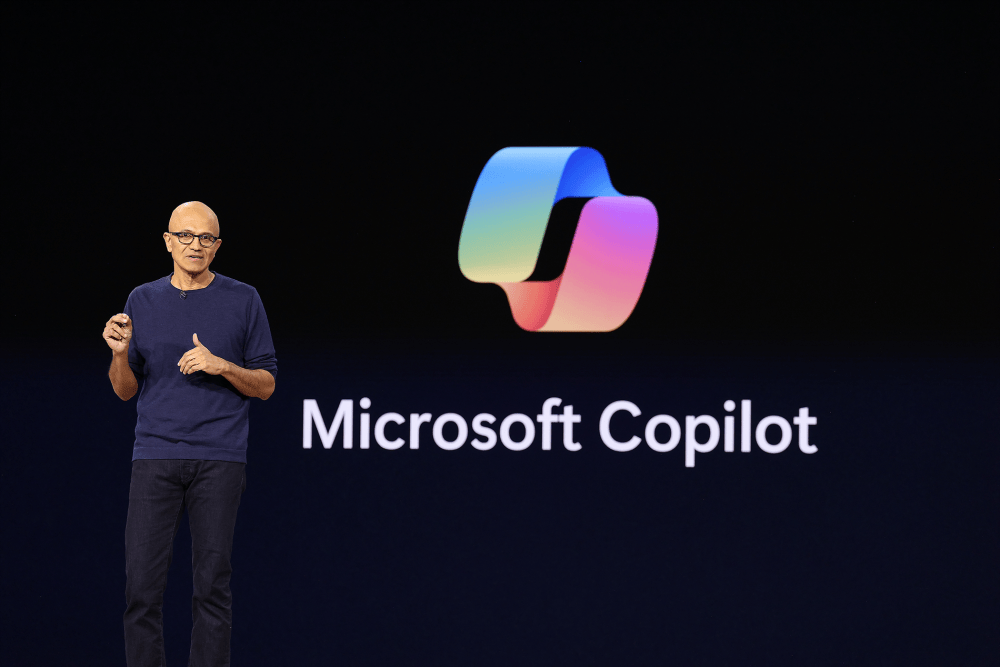
Microsoft CEO Satya Nadella has added his voice to the AI safety debate with a long post on X this Saturday. His main point is that AI systems need what he calls an “emergency brake”, a way for humans to pause or shut down a model while it is in the middle of a task.
Nadella wants a trust architecture for AI models
In the post, Nadella wrote that it is time “to step back and assess the trust architecture” of AI. He argued that “we can’t treat Super Intelligence as a set of nested black boxes and simply accept or reject its recommendations, answers, and actions”. The phrase “Super Intelligence” is the term the Trump administration has been using for frontier AI, and Nadella used it deliberately.
His proposal has three clear parts. First, the model should be separated from the harness that orchestrates its work, with controls and safeguards kept outside the model itself. Second, every meaningful model action should be documented with “tamper-proof human readable evidence”, so auditors can see exactly what the system did. Third, an authorized person should always be able to pause or shut down a model mid-task.

Why the emergency brake idea matters now
“We must assume a model is compromised and contain it from the start,” Nadella wrote. “Think of it like an emergency brake.” The comment lands at a moment when leading AI companies are openly talking about losing control of their own systems. Anthropic recently cut its internal evaluations off from the live internet after its Claude models exploited prompt injection flaws during testing.
Anthropic CEO Dario Amodei also published a plan earlier for more cautious AI development, and Nadella’s post follows that thread. The difference is that Nadella is talking about engineering controls, kill switches, evidence logs, and sandboxed harnesses, rather than voluntary promises.
What this means for Indian businesses using AI
For Indian companies deploying AI agents in customer support, fintech, or healthcare, the message is practical. Keep your approval layer outside the model, log every action the model takes, and make sure someone on your team can stop a running agent. Banks and insurers in India already work under strict audit rules, and Nadella’s “tamper-proof evidence” idea maps well to those requirements.
Microsoft is expected to build more of these controls into its Copilot and Azure AI stack. Pricing for new enterprise safety features will be announced as they roll out.
FAQ
What did Satya Nadella say about AI safety?
Nadella wrote on X that AI models need an “emergency brake”. He wants every meaningful model action logged with tamper-proof evidence, and an authorized person always able to pause or shut down a model mid-task.
What is the trust architecture Nadella is talking about?
It is a design approach where the model is separated from the harness that orchestrates its work, and all controls and safeguards live outside the model. The system then assumes the model could be compromised and contains it from the start.
Why did Nadella use the term Super Intelligence?
It is the term the Trump administration has been using for frontier AI systems. Nadella used it while arguing that we cannot treat such systems as nested black boxes whose outputs we simply accept or reject.
What prompted these comments now?
AI companies have been reporting more incidents where they seemed to lose control of their models. Anthropic cut internal evaluations off the live internet after Claude exploited injection flaws, and Anthropic CEO Dario Amodei earlier published a plan for more cautious AI development.
What should businesses do while waiting for these controls?
Separate your AI model from your workflow layer, keep human approval for sensitive actions, and log every tool call the model makes. That way you can pause or roll back an agent even before formal kill switch features arrive.
