



The company behind the Flipper Zero wants to repeat its crowdfunding trick, this time with a full Linux computer in your pocket. On 17 November, Flipper Devices launched a Kickstarter campaign for the Flipper One, a portable networking multi-tool priced at $399. Global RAM shortages pushed hardware costs up, but the company says the price covers production and leaves no profit margin. Here is what the device does, what runs on it, and when you can actually get one.
What Is the Flipper One
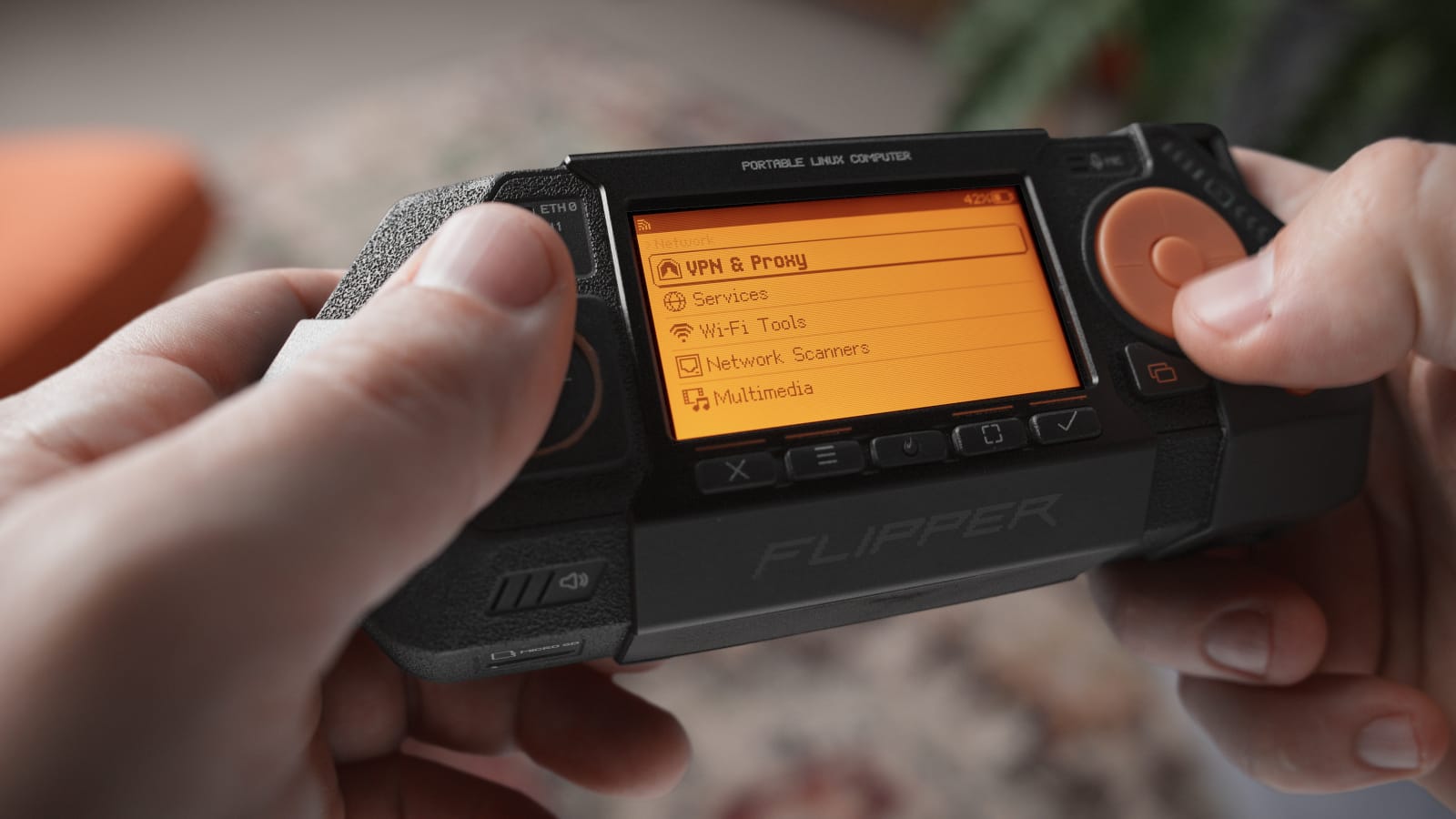
The Flipper One is a portable computer that runs Flipper OS, a Debian-based Linux distribution built by the company. It is a separate product from the Flipper Zero. Where the Zero focused on radio protocols and embedded hardware, the One is built for IP networking and on-device computing.
The hardware picture so far, from the press release Flipper Devices shared with BleepingComputer:
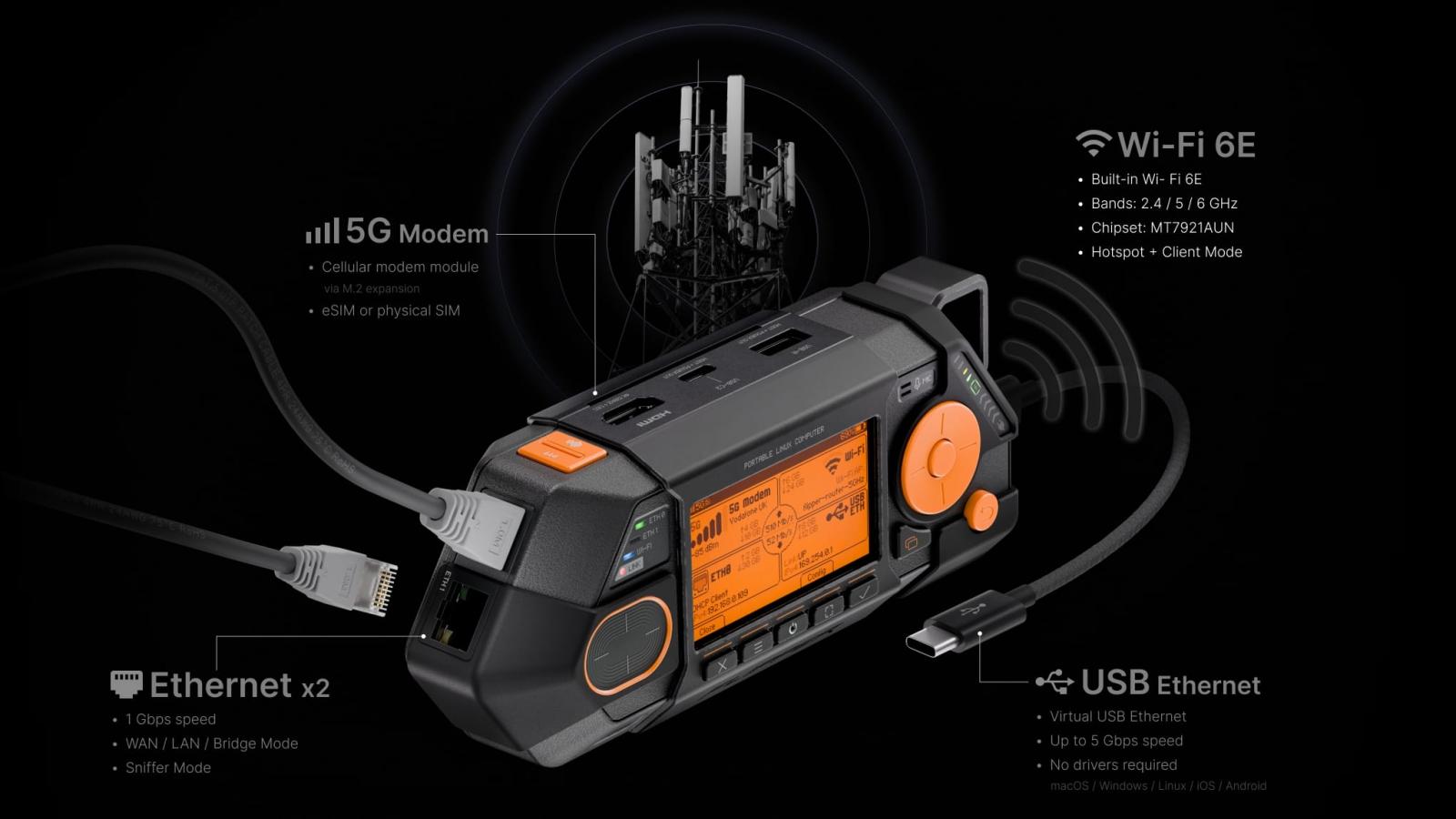
- Connectivity: Wi-Fi 6E, Gigabit Ethernet, and a built-in eSIM
- Multi-WAN: manages up to five network uplinks at once
- Networking roles: acts as a hotspot, runs VPNs, and runs firewalls
- Display out: connects to an external display over USB-C
- Storage: UFS storage, with RAM and UFS together accounting for about half of the total hardware cost
Put plainly, it is a pocket-sized router, firewall and Linux box in one, aimed at pentesters, network engineers and anyone who travels with a bag full of adapters.
Why It Costs $399 Despite the RAM Crisis
The pricing story is unusual. Global RAM shortages and unpredictable price swings have been pushing hardware prices up across the industry, and Flipper Devices acknowledged that memory costs alone make up half the bill of materials. The company’s explanation, via its press release:
“Instead of waiting for perfect market conditions or raising the price, we’re moving forward with the Kickstarter campaign. We aim to make Flipper One as accessible as possible without building a profit margin into the hardware’s price.”
In other words, $399 is being positioned as a cost-price launch. The Kickstarter campaign runs from 17 November to 17 December 2026, with the goal of funding the first production run.
Expansion Modules Announced
The campaign also offers add-on modules, with full specifications yet to be disclosed:
- LoRa radio, with support for MeshCore, Meshtastic and Reticulum networks, plus a walkie-talkie mode
- 5G modem
- Software-defined radio expansion
The LoRa module is the one that will interest mesh networking hobbyists. Meshtastic and Reticulum are the two ecosystems most off-grid communicators use today, and having both supported out of the box makes the device a natural fit for that crowd.
Software Status: Mainline Linux and Open Boot Goals
Flipper Devices has been building this in the open. In May 2026 it asked the community to help build the device, listing ambitious goals and admitting the project’s complexity. Development since then has moved quickly:
- Flipper One already runs on the mainline Linux kernel, not a forked vendor tree
- USB-C DisplayPort patches are under review for mainline inclusion
- Work continues on memory power efficiency and on removing the remaining closed-source boot components
Running on the mainline kernel matters more than it sounds. It means the device gets upstream security updates and long-term support without depending on the vendor to rebase custom patches, and it lowers the barrier for anyone who wants to run a different distribution on it later.
Shipping and What Is in the Box
The schedule is long, which is normal for first-run hardware crowdfunding:
- Campaign window: 17 November to 17 December 2026
- First shipments: estimated July 2027 for the first buyers
- In the box: the device and a USB-C cable
Anyone considering a pledge should treat July 2027 as an estimate, not a promise. Hardware crowdfunding timelines slip, and memory prices are the very thing the company says it cannot control.
How It Compares With Flipper Zero
The Flipper Zero was itself a Kickstarter success story. Launched on the same platform in 2020, it hit its funding goal within eight minutes and raised $4.8 million in 30 days. Since then Flipper Devices has sold over a million units.
The two devices do not overlap much:
- Flipper Zero: sub-GHz radio, infrared, RFID, NFC, GPIO, bad USB. A hardware multitool for embedded and physical interfaces
- Flipper One: a portable Linux computer focused on networking, VPNs, firewalls and on-device computing
If the Zero is a Swiss Army knife for radio and hardware pins, the One is a pocket server for network work.
Practical Ideas for What You Can Do With It
Based on what Flipper Devices has shown so far, these are the workflows that fit the hardware:
- Travel router with VPN. Share a hotel or mobile connection over Wi-Fi 6E with your VPN running on the device, so every gadget you carry is behind the tunnel.
- Multi-WAN failover. With five uplinks managed at once, the device can hold a wired, Wi-Fi and eSIM connection simultaneously and switch when one drops.
- Field network analysis. Gigabit Ethernet plus a Debian userland means the usual toolkit, from tcpdump to nmap, runs directly on the device.
- Off-grid messaging. With the LoRa module, Meshtastic and Reticulum nodes can run without any carrier involvement.
- External display workstation. USB-C DisplayPort output turns the pocket box into a small desktop for terminal work.
Who Should Think About Backing It
The Flipper One is not a phone accessory, and the $399 price plus a July 2027 ship date means it is a tool purchase, not an impulse buy. It fits a few profiles well:
- Network and security engineers. A pocket firewall and multi-WAN box that runs standard Linux tooling covers a lot of on-site work that today needs a laptop and two adapters.
- Off-grid and mesh communicators. The LoRa module with Meshtastic and Reticulum support fills the gap left by plain walkie-talkies.
- Hardware and Linux hobbyists. Mainline kernel support and open boot component goals make it one of the more developer-friendly devices in this category.
- Existing Flipper Zero owners. The two devices complement each other, one for radio and hardware interfaces, one for network and computing work.
Compared with a generic travel router, and there are plenty of compact OpenWrt-based options under Rs 10,000 in India, the Flipper One asks for a premium in exchange for its integrated modem options, the SDR and LoRa expansion path, and software that is not a vendor’s locked firmware tree. Whether that is worth $399 depends entirely on which of those extras you would actually use.
Frequently Asked Questions
How much does the Flipper One cost?
The Flipper One is priced at $399 on Kickstarter. Flipper Devices says the price covers production costs with no profit margin built in, and that RAM and UFS storage account for about half of the hardware cost amid global memory shortages.
When does the Flipper One ship?
The Kickstarter campaign runs from 17 November to 17 December 2026, and Flipper Devices estimates shipments for the first buyers in July 2027. The package includes the device and a USB-C cable.
Is Flipper One the same as Flipper Zero?
No. The Flipper One is a portable Linux computer and networking multi-tool running a Debian-based Flipper OS, while the Flipper Zero is a hardware multitool for radio protocols and embedded interfaces. Flipper Devices says they are separate products.
What operating system does the Flipper One run?
It runs Flipper OS, a Debian-based Linux system. Flipper Devices says the device already runs on the mainline Linux kernel, with USB-C DisplayPort patches under review for mainline inclusion and work ongoing to remove the remaining closed-source boot components.
