



Your next phone, laptop, or console is about to cost more, and the reason is sitting inside every one of them. Memory chip prices have gone through the roof this year, and the internet has started calling it RAMageddon. Global DRAM revenue jumped 369% year over year in the July to September quarter of 2026, according to Counterpoint Research, and the people who track this market say prices will stay high well into next year.
What Is RAMageddon?
RAMageddon is the nickname for the memory supply crunch that started in 2026. AI data centres are buying DRAM faster than chipmakers can make it, and that shortage has spilled over into the memory that goes into consumer gadgets.
The squeeze shows up everywhere. Phone makers are paying more for the same RAM, laptop prices are creeping up, and gaming hardware feels it too. The situation is serious enough that SK hynix, one of the biggest memory makers, has warned the shortage could last through 2030.
The Numbers Behind the Memory Price Spike
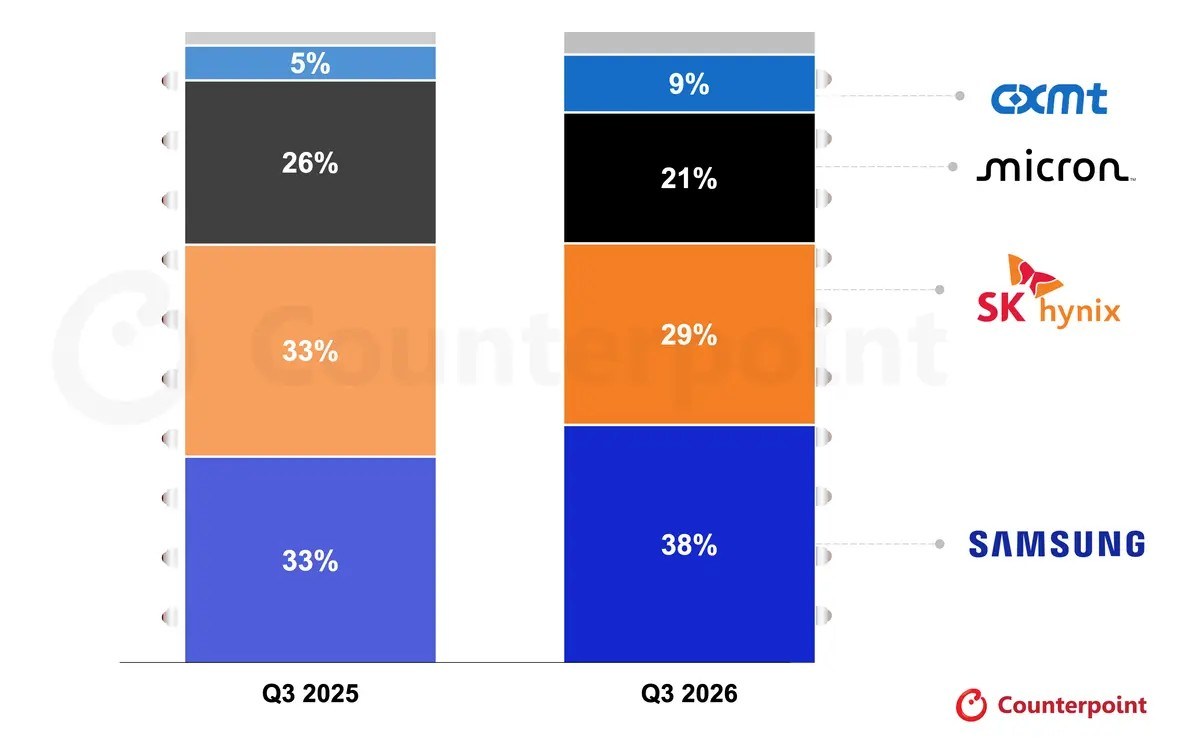
Counterpoint Research’s Global Memory Tracker for Q3 2026 paints a stark picture:
- Global DRAM revenue: up 369% year over year in Q3 2026
- Average selling price: $1.9 per gigabit, which works out to roughly $15 per gigabyte at current pricing
- Samsung: 38% market share, the biggest player right now
- SK hynix: 29% share, with revenue growing over 40% quarter on quarter
- Micron: 21% share
- CXMT: 9% share, slipping one percentage point from Q2
Counterpoint also notes the broader DRAM supercycle is nearing the $200 billion mark. In plain language, memory is now one of the hottest businesses in the chip industry.
Notice what is missing from those numbers: spare capacity. When one product category grows 369% in a year, everything else that needs the same chips competes for what is left, and that competition is what shows up as higher prices on shop shelves.
Why AI Is Eating the World’s Memory
Two separate demand waves are hitting at once.
First, AI accelerators and data centre servers need HBM, the stacked high-bandwidth memory used on GPU-class chips. HBM revenue nearly doubled compared to the same quarter last year. SK hynix dominated HBM3E sales, but the market is now switching to HBM4, where Samsung has the early lead.
Second, the rise of agentic AI is driving demand for ordinary system memory. Counterpoint reports DDR demand up 500% year over year and LPDDR demand up 400%. That second wave is the one that touches phones and laptops directly, because LPDDR is exactly what goes into mobile devices.
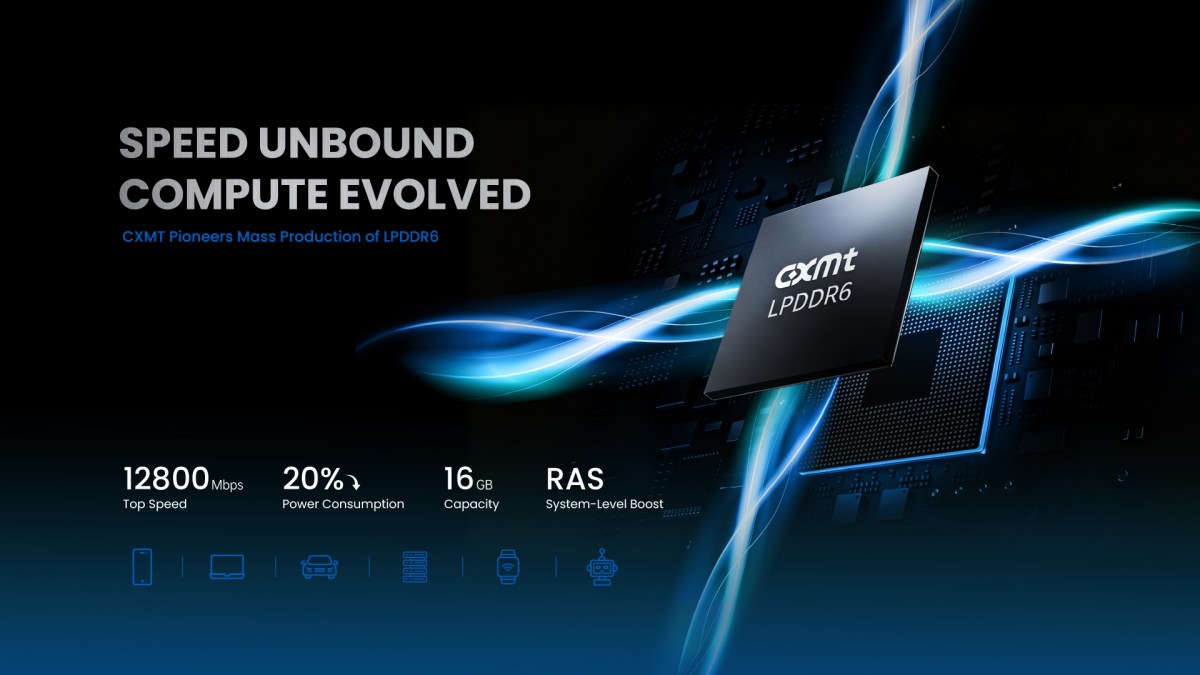
China’s CXMT was first to mass produce the newest LPDDR6 standard, and those chips already ship inside 16GB versions of the Xiaomi 18 Fold (the 12GB models use LPDDR5X). CXMT is also playing catch-up on HBM, planning HBM3E mass production only next year.
MS Hwang, Research Director at Counterpoint Research, sums up the outlook: “Memory prices should stay strong next year. HBM prices, which lagged commodity DRAM this year, are now catching up. Long-term agreements (LTAs) are supporting prices and supply will stay tight because major new fabs will not start production until 2028.”
What It Means for Phones, Laptops and Consoles
The consumer fallout is already visible. Android-focused reports describe RAMageddon squeezing smartphone prices as makers absorb higher component bills. Apple has flagged rising memory costs in its earnings calls. Even console supply chains are feeling it, with reports that Nintendo’s biggest ROM chip supplier is bowing out of the business.
For buyers, the pattern is familiar from previous chip crunches. Prices rise first on new flagships, then the increase works its way down to mid-range phones and laptops. Some brands quietly cut base storage or RAM instead of raising prices outright, so read the spec sheet carefully before upgrading.
What Happened the Last Time Memory Prices Spiked
The 2017 to 2018 memory crunch is the closest comparison. Back then, DRAM prices roughly doubled and stayed high for close to two years, and laptop and phone prices followed. What makes 2026 different is the demand source. Data centre AI orders are larger and stickier than the smartphone boom of the last cycle, and the industry’s own forecasts say new supply only arrives when major fabs start production in 2028.
History also shows how the crunch ends: new capacity comes online, demand normalises, and prices fall quickly. That fall is likely coming, but not before your next upgrade window.
Tips: How to Shop During RAMageddon
- Do not wait for a price drop. Counterpoint expects prices to stay strong through next year, and new fabs do not start producing until 2028.
- Buy the RAM you need now. A 16GB laptop or phone today will cost you more next year, not less.
- Consider the previous generation. Last year’s models were built before the worst of the price increases.
- Upgrade a desktop early. Desktop RAM is the easiest part to add later and the most exposed to spot price swings.
- Check refurbished and open-box stock. Older inventory was bought at old prices and can still be found cheap.
One more practical note: keep boxes and receipts for memory purchases during a shortage. Warranty replacements in a tight market can take longer than usual, and proof of purchase speeds things up.
What is RAMageddon?
RAMageddon is the nickname for the 2026 memory chip shortage caused by AI data centre demand. DRAM revenue grew 369% year over year in Q3 2026, and memory prices for phones, laptops, and consoles are rising as a result.
Why are RAM prices so high in 2026?
AI accelerators need HBM memory and agentic AI is driving up demand for DDR and LPDDR system memory, with Counterpoint reporting demand up 500% and 400% year over year respectively. Supply is tight because major new memory fabs do not start production until 2028.
Will RAM prices drop in 2027?
Probably not. Counterpoint Research’s MS Hwang says memory prices should stay strong next year, supported by long-term agreements and tight supply. SK hynix has warned the shortage could last through 2030.
Should I buy a laptop or phone now or wait?
Buy now if you need one. Component costs are feeding into retail prices, and the memory shortage is expected to persist through 2027. Waiting is unlikely to save you money on a like-for-like configuration.
